No donor data for Shelley Moore Capito yet.
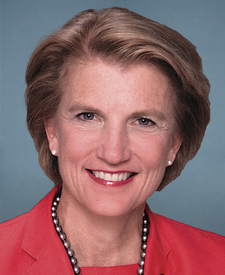
Shelley Moore Capito
Senator, WV • Republican
25 years in Congress (first took office 2001)
Sign in and give your stance on bills to see your alignment score with this member.
What Shelley Moore Capito said
- Floor speechNov 9, 2026LEGISLATIVE SESSION
Madam President, I would like to thank my ranking member and good friend Sheldon Whitehouse for his steady and informed and innovative approach to this. This is not easy. This is legacy setting. This is big. This is, I think, something that all of us--and I appreciate the fact that he made the point: If you are voting against this bill, you are voting against 100,000 new jobs, and you are voting against making data centers pay. But you are also voting against not--cutting redtape or duplicative reviews or regulatory uncertainty that is just weighing us down. Businesses, large and small, are looking to invest meaningfully in our country, and they lack the certainty to be able to make those decisions. Communities nationwide have waited in regulatory limbo. And it is not just energy. It is roads. It is bridges. It is energy infrastructure. It is manufacturing facilities and other investments--things like launchpads for the space industry. All of this has led to us losing jobs or not being able to create them, missed economic opportunities, and higher prices across the country. Data from the National Association of Manufacturers shows that permitting delays are costing America's manufacturers $12.1 billion every year--including in my State, $87 million. That is significant. According to new data from McKinsey, $1.8 trillion worth of investment is on hold and locked up in the Federal permitting system right now. That includes in my small State--$22 billion in West Virginia. These are projects that have good-paying jobs, improved mobility, increased access to clean drinking water, deployed broadband into rural areas, and so much more. The environmental permitting and review processes should be tools for informed decision making, not reasons that decisions can't be made. This is not a sustainable way for the United States to compete with the rest of the world, and it is certainly not a sustainable way to address the energy and affordability issues that we are facing today. It is no secret that America's energy demand--and Senator Whitehouse talked about this--is growing rapidly to meet the needs of a modern economy. To meet those needs, we have got to modernize. We have to modernize our grid, increase our energy production, and build the fracture to keep America competitive and secure for decades to come. So it is time for Congress to act, and, in my view, it is actually past time. As chairman of the Environment and Public Works Committee, I worked, as I mentioned, with my ranking member, Senator Whitehouse. We also worked with Chairman Lee of Energy and Natural Resources and his ranking member, Senator Heinrich from New Mexico. We have introduced the Bipartisan American Affordability and Jobs Act of 2026. Everything has a name. This one is called BAAJA, and it is not California Baja. It is American BAAJA. It will unlock economic opportunity, infrastructure development, and energy production. So it is kind of in two parts because we share jurisdiction here. The first part is in our jurisdiction of EPW, and it consists of reforms to the laws that set the frameworks of our environmental review and permitting processes. NEPA--we have heard a lot of about NEPA; it has been in effect, I think, since the seventies--and the Clean Water Act and the Endangered Species Act are in the EPW section. It provides certainty for permitted projects, and they will retain their permits if they remain in compliance with the law. You say: Of course, they would retain their permits. Well, guess what. That hasn't been happening. It didn't happen in the last administration. It hasn't happened in this administration. In the second part of the bill--and also, I want to add, in the EPW, because we oversee the environmental regulations--we are not skirting any environmental regulations at all. We don't want to. We won't. We didn't touch those. We are merely making it more efficient and more time sensitive. The second part of the bill captures reforms to the statutes in the ENR's jurisdiction, which is the National Historic Preservation Act and the Federal Power Act. This section also includes the part that Senator Whitehouse was talking about, the Ratepayer Protection Act. This is legislation that would make potential data centers pay their own way--pay their own way--instead of American consumers facing higher electric bills, higher power bills, higher utility bills. Together, the package that our committee has put together fulfills these key policy priorities for Members of both sides of the aisle and a diverse set of stakeholders. I think these comprehensive permitting reforms will generate benefits for our country for years to come for three reasons. First--and I think we have heard this during the last election, this last week--this bill is something that they want. They want us to work together. This bill is bipartisan. Senators Lee, Whitehouse, Heinrich, and I have worked together for over a year, and our staffs have done an incredible job. This is together because this is the only way that we can achieve durable and implementable reforms for our environmental review and permitting processes. There is something in this bill for everyone, and it is fair to everyone. That was important to me. Let's be fair, regardless of what your project is. And we owe it to the American people to come together as a body and pass this legislation. OK, first, bipartisan. Second, it will help all types of projects. We can't adjust processes for just one type of project and not the other. I didn't think that was a good idea, and neither did my fellow Senators. Projects like coal mines, windmills, gas pipelines, solar farms, and steel mills will all benefit from this legislation. Third, lastly, I think the package addresses critical stages of the permitting process. It creates predictability, consistency, and finality in securing a permit. And it will allow our laws to balance public health, the environment, and the needs of our economy. Quite frankly, you are not going to make an investment if you don't have this certainty. And, finally, our legislation will prevent unneeded and unnecessary delays and endless litigation that could block growth. In West Virginia, investments have collapsed under the weight of legal challenges, denying potential benefits in areas that need the support the most. When a project sits in the environmental review and permitting process for years, what happens? Jobs are not created. Critical infrastructure is not built. Energy is not brought onto the grid. The grid is not modernized. And, ultimately, American families and businesses face higher costs and fewer opportunities. The White House Council of Economic Advisers released a report on the benefits of BAAJA, and the results are clear. Families would feel the benefit of between $82 to $164 billion in economic output every single year. So what would that result in? Real wages will increase. Electricity bills will fall. And everyday expenses would be reduced. We cannot let the costs of permitting delays fall onto the American families as they have in the past. I am no stranger to trying to get permitting reform into the Congress. I have introduced multiple bills over multiple years to approve this process. And while Congress has passed very limited reforms, we have not passed significant reforms to NEPA in several decades. Republicans and Democrats alike recognize the need for reforms to unlock investment, to build projects that are important to our States. On both sides of the aisle, we understand that our constituents need lower costs, good jobs. Communities need economic investment. Businesses need certainty. And America needs to build. These are not partisan ideals. These are American principles. The administration has also rallied behind this deal, supporting our efforts in the Senate to pass durable reforms so we can unleash our Nation's full potential. Additionally, we made it a priority to have a robust managers' amendment to this legislation that makes targeted changes based on a lot of the feedback that we got from our Members and stakeholders--regardless of their party or regardless of what their particular interests would be--to help us build further support. So I am thankful for my colleagues' efforts to strengthen BAAJA and the contributions from Members of the House of Representatives as well. This legislation reflects a vast amount of perspectives and priorities, and I am proud of the product that we are voting on today. The ranking member mentioned a lot of the support that we have received. We have received--we have a list of like over 1,100 entities that are in support of this legislation. And it represents a broad swathe across the country--really, people who have never been on the same side of any argument. It includes oil and gas producers and solar energy groups, labor unions and business associations. They all recognize the critical need for permitting reform and the benefits that BAAJA will have on affordability, energy reliability, and economic growth. A statement from the American Petroleum Institute's Mike Sommers says: In another statement, Solar Energy Industries Association CEO Tim Pawlenty said: Xan Fishman, who is the vice president of the Energy Program at the Bipartisan Policy Center says: In my home State, from the Gas & Oil Association of West Virginia, Rebecca McPhail has said the following: From the business community, Rodney Davis, senior vice president and head of government affairs at U.S. Chamber, has said: Demonstrating the breadth of support this bill has, the Laborers' International Union of North America general president, Brent Booker, gave the following statement of support: That is me putting my quote into his. And, finally, representing a broad coalition of labor groups, in a letter from Sean McGarvey, president of North America's Building Trades Unions, he said: I could not agree more with all of this. This is an unprecedented opportunity. This is big. This is big for us to come together at this moment to show the American people we are listening to you; we have heard you. And the substance of what we have been working on for the last year will answer a lot of some of the questions that we have heard over the last several months. The Bipartisan American Affordability and Jobs Act is a win--a win--for America. We cannot let this moment pass by. The reality is this. Over the next several years, we will have no choice but to increase our national energy production and manufacturing capacity to meet increasing demand. And that means making sure that our infrastructure projects can be built quickly, efficiently, and responsibly. The House has already passed several key pieces of legislation, including the SPEED Act and the PERMIT Act. Now, it is our turn in the Senate to act on the opportunity in front of us. I encourage my colleagues to rise to the importance of this moment and to vote in favor of the Bipartisan American Affordability and Jobs Act. American growth, competitiveness, security, and families are at stake. I yield the floor.
Source →
Sponsored
None loaded
Voted yes
Voted no
None recorded