No donor data for Jerry Moran yet.
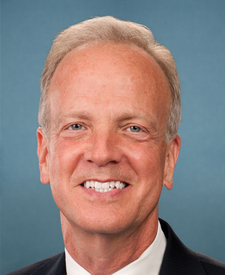
Jerry Moran
Senator, KS • Republican
29 years in Congress (first took office 1997)
Sign in and give your stance on bills to see your alignment score with this member.
What Jerry Moran said
- Floor speechNov 11, 2026VETERANS' COMPENSATION COST-OF-LIVING ADJUSTMENT ACT OF 2026
Mr. President, I ask unanimous consent that the motion to reconsider be considered made and laid upon the table.
Source → - Floor speechNov 11, 2026VETERANS' COMPENSATION COST-OF-LIVING ADJUSTMENT ACT OF 2026
I know of no further debate on the bill.
Source → - Floor speechNov 11, 2026VETERANS' COMPENSATION COST-OF-LIVING ADJUSTMENT ACT OF 2026
I now ask unanimous consent that the bill be considered read a third time.
Source → - Floor speechNov 11, 2026VETERANS' COMPENSATION COST-OF-LIVING ADJUSTMENT ACT OF 2026
Mr. President, just a few moments ago--a half hour ago--I was on the floor recognizing our veterans from across the country, recognizing the veteran Members of the U.S. Senate, and I indicated that I would be back on the Senate floor today to take concrete action to demonstrate our respect and gratitude to those who served our Nation by passing legislation that keeps our commitments, that makes certain that our veterans have a greater opportunity to a fuller life and that we reward them and pay tribute to them for their service in actions, not just words. I am here to do that. I am joined by a number of my colleagues in support of this legislation and certainly in support of the veterans that it will benefit. I also know that since my last remarks on the Senate floor--in those remarks, I mentioned the Take Care of America's Veterans Act, indicating it would deliver meaningful benefits to those who served our country. And since that time, the House of Representatives has unanimously, by voice vote, passed that legislation, what we call TCAVA. And it will provide millions of veterans, caregivers, survivors, and their families who have been waiting a long time for those benefits--it will give them the opportunity to receive those. I can think of no better way--I applaud the House of Representatives for the passage of that legislation. And I can think of no better way for our veterans to be honored today--this Veterans Day 2026--than us now taking up that legislation and seeing it to its final moment, signed by the President of the United States, enacted into law, to the benefit of many caregivers, veterans, and family members. And, importantly, that legislation includes the Richard Star Act to end this unjust way in which we treat those who are disabled and reduce their compensation related to their retirement benefits. So significant developments that I pay tribute to are occurring today on this specific occasion. But I rise now in support of legislation introduced by Ranking Member Senator Blumenthal and me and members of the Veterans' Affairs Committee in particular. The legislation is the Veterans' Compensation Cost-of-Living Adjustment, or COLA, Act. This is a nonpartisan, commonsense bill where Congress comes together. I indicated in my remarks earlier that, surely, veterans is a place where we can still set aside partisan differences and work on behalf of every veteran in this country. And here is an example of that happening--bipartisan effort, bipartisan legislation--to come together to pass this legislation. It makes certain the VA's disability compensation benefits for survivors and dependents and others covered by benefits keep pace with the Social Security adjustments. They are adjusted, as is Social Security, and now these veterans' benefits are adjusted to keep pace with the Consumer Price Index. Veterans and their families deserve peace of mind, knowing the benefits they earned will keep pace with the changing economy. Millions of veterans and survivors rely upon these benefits to help make ends meet, and this annual adjustment helps alleviate financial uncertainty that can come with rising costs. Today, we honor and recognize those who have served our Nation in uniform. We must also remain committed to making certain they receive the support and benefits they have earned and deserve. The Members of the Senate who are with me today are here on Veterans Day. I would guess they, too, like me, wish we were home among those who served our Nation and honoring them in person. But we are here doing work today that includes making certain we keep our commitments to those we wish we were at home to be with. In addition, the opportunity for us to come together to pass this legislation today is especially meaningful to us on Veterans Day. As chairman of the Senate Committee on Veterans' Affairs, I know that taking care of veterans and their families, caregivers, and their survivors is a responsibility that extends beyond any one person and any one member or any political party. This legislation is one of the important ways we can come together and fulfill that responsibility in this Chamber today. Mr. President, let me now utilize the magic words that will move this legislation forward by asking for this legislation to be passed by the U.S. Senate today. Therefore, as if in legislative session, I ask unanimous consent that the Senate proceed to the immediate consideration of H.R. 8552, which was received from the House and is at the desk.
Source → - Floor speechNov 11, 2026RESOLUTIONS SUBMITTED TODAY
I ask unanimous consent that the resolutions be agreed to, the preambles be agreed to, and the motions to reconsider be considered made and laid upon the table, all en bloc.
Source → - Floor speechNov 11, 2026RESOLUTIONS SUBMITTED TODAY
Mr. President, as if in legislative session, I ask unanimous consent that the Senate now proceed to the en bloc consideration of the following resolutions, which are at the desk: S. Res. 956, S. Res. 957, and S. Res. 958.
Source → - Floor speechNov 11, 2026Veterans Day (Executive Session)
We are here on Veterans Day, Veterans Day 2026. I can't think of an instance in which I have not been with veterans at home in Kansas on this day, but I am pleased that the U.S. Senate is working its business. But I would not want this day to pass without making remarks to those veterans that I admire, respect, and know back home and really to our Nation's veterans across the country. This is the day that our Nation comes together to recognize Veterans Day. We honor and pay tribute to those who have served and sacrificed to protect our freedoms. There is no group of people that I hold in higher regard than our Nation's veterans. The challenges they have faced, the courage they have shown, the patriotism they exude, and their selfless sacrifice for our freedoms are something we will never be able to repay. It is my view that I, as a citizen--all of us, as citizens, have the obligation to protect the freedoms and liberties that our Founders, the Framers of our Constitution, gave us and that these men and women over decades, over generations, have fought to preserve. Veterans Day was originally called Armistice Day. This day of recognition was created to commemorate the end of World War I, on the 11th hour of the 11th day of the 11th month. Years later, in 1953, Alvin J. King of Emporia--a town in my home State of Kansas--proposed changing the name from ``Armistice Day'' to ``Veterans Day'' to recognize and honor America's veterans from all wars and from all conflicts. In 1954, Kansas' very own President, President Eisenhower, made the change official by establishing Veterans Day. For 107 years, our Nation has observed this holiday, first as Armistice Day and now as Veterans Day. Each year, we remember the men and women who served and earned our lasting gratitude. Today, we have a special opportunity to remind veterans in our lives of how grateful we are for them and to share our appreciation for all they sacrificed in uniform and how they continue to serve our Nation as veterans. My dad Ray Moran served in Italy and Africa during World War II. While his military service earned him the honor that is due all veterans, the life he modeled for me in the years after the war embodied character and patriotism strengthened by his time and service in the military. Back at the time in which we were about to dedicate the World War II Memorial here in Washington, DC, I had the opportunity to visit a few days before the ribbons were cut, the flags were flown, and the speeches were given to dedicate a new memorial to our veterans, the World War II Memorial. I would be remiss if I didn't remind Americans of the value of the service of Senator Dole certainly as a member of the military, as a veteran, but as the leader in the effort to create the World War II Memorial on The Mall here in the Nation's Capital. That day that I visited, I put my running shoes--my tennis shoes--on and walked up to the World War II Memorial to see what it looked like and what it would be in just a few days, as that celebration was coming. Days before that formal dedication, I thought about it. When I saw that memorial, I found the Kansas pillar, and I thought of my dad and many heroes like him. I called my dad back home in Kansas--I stepped away from the memorial with my flip phone--to say something to my dad about being at the memorial. In many ways, I was lucky that he didn't answer. The answering machine, the voicemail, picked up, and I left a message for my dad. I called him, and I told him: Dad, I am at the World War II Memorial--a memorial built in your honor--and, Dad, I want you to know that I respect you. Dad, I thank you for your service, and, Dad, I love you. I say I was lucky that the voicemail picked up because I don't know that I would have said those words if I was actually speaking to my dad. Perhaps as an aside, on my way back to my office here on Capitol Hill, my phone rang, my flip phone rang. It was my dad at home in Plainville, KS. He said: Gerald, you left me a message. I couldn't understand it. Would you repeat it? I no longer can repeat it to my dad, but I can say it to others and will say it here today on the floor of the U.S. Senate. I am not a veteran. I chair the Senate Veterans' Committee. When I was in high school, the Vietnam war was ongoing. If you were a year and certainly 2 years older than me, you served in Vietnam. And I saw the circumstances under which those who served in Vietnam returned to our country, and in too many instances, they were mistreated, disrespected. I told myself, as a then-16-year-old kid, I am going to do everything I can to say thank you and express my respect for those who served in hopes that I can make up for or compensate for how those who served in Vietnam were treated. Veterans Day is a perfect day to do that, but so are all 364 other days of the year. I said I was the chairman of the Veterans' Committee. I never envisioned in my life being the chairman of the Veterans' Committee because I never envisioned in my life ever being a Member of Congress. But I served on the House Veterans' Affairs Committee, and I now serve on the Senate Veterans' Affairs Committee with many of the Members of this body, this Senate, who care deeply about those who served our Nation in the military. Veterans Day is dedicated to honoring people like my dad and so many others. Today, we honor all those who have worn the uniform, and we have a duty as Members of Congress to make certain that they are receiving the healthcare benefits and the services they have earned and deserve. I indicated to you that I made a commitment to myself that I was always going to say ``Thank you, and I respect you,'' and I continue to say those things. I have done it today to those who served in our military. But as Members of the U.S. Senate, we have an opportunity to do more than just say thank you; we have an opportunity to actually meet the requirements, keep our commitments--promises made, promises kept--to those who served. So today, we say thank you, but at the same time, we recommit ourselves--the Senate Veterans' Committee, the U.S. Senate--we recommit ourselves to making sure that we live up to the other obligations we have to those who served beyond mere words. Today, the U.S. House of Representatives is voting on landmark legislation that would support tens of millions of veterans and their families, their caregivers, and their survivors. This legislative package, known as Take Care of America's Veterans Act, includes the Major Richard Star Act, which would allow combat-disabled veterans to receive both their earned retirement pay and their VA disability benefits. The Richard Star Act would allow our disabled combat veterans to receive both--both--their earned retirement pay and their disability benefits. In addition to that major piece of legislation included in the Take Care of America's Veterans Act, there are a number of items which are hugely important to many other veterans, their families, and their caregivers. The Take Care of America's Veterans Act would also allow veterans--particularly our most vulnerable veterans in need of support for mental health or addiction support--to access lifesaving care more easily and much closer to home. In Kansas, a rural State, we recognize the challenges that distance creates, and we need to make every effort to make sure distance does not mean someone continues to suffer--a veteran continues to suffer with mental health issues or contemplates ending their life. The Take Care of America's Veterans Act would support veteran caregivers during and after their caregiving journeys while improving support for aging veterans, veterans with spinal cord injuries and disorders, and veterans with serious conditions like ALS. The Take Care of America's Veterans Act would deliver meaningful benefits to surviving spouses and family members of our Nation's fallen servicemembers and veterans. Millions of veteran caregivers, survivors, and families have been waiting on Congress--millions have been waiting on Congress, us--to deliver these reforms. They should not have to wait any longer. I can think of no better way of honoring veterans and their families than by passing the Take Care of America's Veterans Act. I appreciate the support my colleagues in the House are giving to this legislation to advance this bill today, tomorrow, and I will not let up on our efforts to secure a vote in the Senate as soon as possible thereafter. Veterans and their families deserve peace of mind, knowing that the benefits they have earned will not decrease with the changes in our economy, and this bill would deliver that. So to all of the veterans at home in Kansas and across the country, we say thank you. I say what I said to my dad, who is no longer living: Dad, every veteran across the country, I respect you, I thank you for your service, and I love you. Our veterans have earned our Nation's lasting gratitude today--every day. We need to be providing them with the support they need. I also want to take this opportunity--again, I don't think I have ever been in Washington, DC, on Veterans Day; I have been at home or elsewhere across the country or around the globe in cemeteries to pay respect and honor. But we have a number of our colleagues, a number of Senators who serve in the U.S. Senate who served our Nation in uniform, and I pay respect and attention and honor to those in that circumstance. My colleagues in the Senate: Senator Richard Blumenthal, Senator Jack Reed, Senator Ed Markey, Senator Ruben Gallego, Senator Gary Peters, Senator Mark Kelly, Senator Tammy Duckworth, Senator McConnell, Senator McCormick, Senator Wicker, Senator Marshall, Senator Young, Senator Rick Scott, Senator Sheehy, Senator Ernst, Senator Cotton, Senator Banks, and Senator Sullivan. I ask all of my colleagues--Republicans, Democrats--this is an issue that can surely pull us together, not pull us apart. As we go forward from today, not only do we pay respect to colleagues here in the Senate and across the country, their colleagues who served in uniform, but let us use this day, let us use Veterans Day 2026 to come together and say that we are not going to allow partisan bickering to keep us from resolving the issues that would increase the lot in life, improve the circumstances of those who gave so much. May God bless our service men and women, our veterans, and the country they love and served. Mr. President, I would also say I will be on the Senate floor sometime today. I will offer legislation. I will ask for unanimous consent that this legislation pass. In doing so, we will be giving our military members and--let me say that clearly--we will be giving our veterans a cost of living increase, and I hope it will pass here on the Senate floor on this Veterans Day. Mr. President, I yield the floor.
Source → - Floor speechNov 9, 2026LEGISLATIVE SESSION
Madam President, sadly, on January 29, 2025, our Nation witnessed a tragedy. We witnessed it here in Washington, DC, at Reagan National Airport. Flight 5342, a regional jet originating in Wichita, KS, collided with a U.S. Army Black Hawk helicopter near that airport. Sixty-seven people lost their lives. Seven of them were from my State of Kansas. Nearly 2 years later, their families continue to live with an unimaginable loss, and Congress still has not completed the comprehensive aviation safety legislation necessary to address the failures that contributed to the tragedy. It is unacceptable. Among those aboard Flight 5342 was Grace Maxwell. Grace should have graduated from Cedarville University with her bachelor's degree. And after graduation, she planned to pursue a master's degree. Instead, her family is left to imagine that future she would have had. The Maxwell family is not alone. The families of the victims have continued to urge Congress to act, not simply for their loved ones but to make certain that no other family--no other family--has to experience this kind of tragedy. We owe them more than our condolences. We owe them action. In December, almost a year ago, the Senate unanimously passed the bipartisan ROTOR Act to strengthen aviation safety and prevent future accidents. The ROTOR Act was carefully developed with the support and input of the crash victims' families, the National Transportation Safety Board, the Federal Aviation Administration, the Department of Transportation, and the Department of Defense. Rather than pass the Senate's legislation, the House advanced its own proposal. The House bill contains important safety reforms. And I appreciate the work of my colleagues in both Chambers, but the two bills take different approaches to some of the important safety requirements. Productive negotiations have taken place between the House and Senate. I am encouraged by that progress, but we must finish the job. We have been talking about that progress and those negotiations for a long time. We must get the job done. We must get it done right. One of the most important provisions in the ROTOR Act is the requirement for Automatic Dependent Surveillance-Broadcast In, known as ADS-B In. This technology provides pilots with real-time information about nearby aircraft. This allows pilots to see surrounding air traffic from their cockpits and make better and quicker informed decisions. It is particularly important in congested airspace like the airspace surrounding Ronald Reagan Washington National Airport. Investigators from both the Army and NTSB identified a series of failures that contributed to the January 29 tragedy, including faulty equipment, dangerous flightpaths, and inadequate tracking technology. The NTSB concluded that the technology allowing pilots to see GPS-based information about nearby aircraft could have helped prevent this collision. With the appropriate technology, pilots could have had nearly a minute of warning to recognize the danger and potentially change the course--nearly a minute that could have made the difference between the life and death of 67 people. The ROTOR Act incorporates those findings and puts critical safety improvements into law. It is not an arbitrary mandate. It is a recommendation rooted in the independent investigation of a tragedy that should never have happened. The House and Senate have different approaches to ADS-B In. We need to find a common ground and produce a bill that can pass both Chambers, but compromise cannot mean abandoning the lessons of January 29. We must reach an agreement that addresses the recommendations of the NTSB and the Army's investigation, and we cannot water down critical safety reforms. Our focus must remain on one mission: making our skies safer and preventing another tragedy. Every provision in the final bill should be measured against that standard. Does it address a demonstrated safety concern? Does it implement the recommendations of experts who investigated this crash? Does it make our aviation system safer--commonsense questions that need to be answered about the legislation. This work extends, however, beyond the ROTOR Act. As chairman of the Commerce Subcommittee on Aviation, I have also worked to address the growing number of close calls involving aircraft on runways and airport services. In June, I held a hearing to examine these incidents and identify ways to prevent them before they become tragedies as well. I worked with my colleagues to advance the bipartisan Runway SAFE-T Act to improve training and technology and reduce runway and airport surface incidents. That legislation was approved by the Commerce Committee in September, and I will continue to work with my colleagues to advance it. We cannot and should not wait for another tragedy before addressing known safety concerns. Congress has a responsibility to finish this aviation safety legislation. The Senate has acted. The House has acted. There is bipartisan support for improving aviation safety, and now we must resolve our differences and deliver a final bill. I am grateful to the families of the victims for their continued commitment to aviation safety. To those families, I want to again say: We have not forgotten your loved ones. We have not forgotten January 29. We cannot. I cannot. The time for delay is over. We have the findings. We have the recommendations. We have a path forward. We just now need determination--determination to finish the job. We cannot bring back the 67 people who lost their lives, but we can honor them by making certain that the failures that contributed to the tragedy are addressed and that the same mistakes are not repeated. The traveling public deserves to know when they board an airplane that Congress has done everything within its power to protect their safety. We need to reach an agreement and pass comprehensive aviation safety legislation and send a strong bill to the President's desk. The families of the 67 victims deserve nothing less. The American people deserve nothing less. Madam President, over the weekend there was an announcement, and I rise as a result of that announcement. I rise tonight--this evening--to recognize Ed Bolen, a native of Salina, KS, who has been a leading voice for the aviation industry for decades. After 22 years as president and CEO of the National Business Aviation Association, Ed announced his retirement. Ed's passion for flying began early, when he was introduced to aviation by his father, who served on the board of the Salina Regional Airport Authority. Ed went on to earn his pilot's license, and he turned a love of flying into a career as a champion of general aviation and the men and women who support that industry. Early in his career, Ed served as a legislative aide for U.S. Senator Nancy Kassebaum of Kansas, who had played a key role in the passage of the historic General Aviation Revitalization Act of 1994. This legislation helped revitalize aircraft manufacturing, preserve thousands of jobs, and strengthen the general aviation industry, which remains a critical component of the Kansas economy. Throughout his career, Ed has worked across the aisle to achieve results for aviation. His career included time as a member and chair of the Management Advisory Council at the Federal Aviation Administration, and he also served on the Commission on the Future of U.S. Aerospace. In each of these roles, he helped shape our national aviation policies to further national security, economic growth, and technological advances. Since joining NBAA in 2004, Ed has continued to be a champion--a champion for that aviation industry that he loves so much. He has been a trusted adviser to Members of Congress, policymakers, and aviation stakeholders, building consensus around issues that matter most to the future of aviation. Whether advocating for a safer and more efficient aviation system, protecting access to our Nation's airports and airspace, supporting workforce development, or championing air traffic control modernization, Ed has met every challenge with determination, thoughtful leadership, and an unwavering commitment to the community he represents. In true Kansas fashion, Ed has always focused on people, on relationships, on bringing others together to accomplish positive outcomes. That mindset has made him not only an effective advocate but also a valued friend, adviser, and respected voice throughout the aviation community. It is fitting that Ed first discovered his love for flying at a regional airport in Kansas, the air capital of the world. On behalf of the U.S. Senate, I want to thank Ed for his years of service and his steadfast commitment to the men and women who make up the aviation community. I express my appreciation to him and his family for his commitment, and I wish them the very best now and in the future. His leadership will clearly be missed. I yield the floor.
Source → - LEGISLATIVE SESSION
Madam President, I also ask unanimous consent to waive the mandatory quorum call with respect to the cloture motion on the motion to proceed to H.R. 2347.
Source → - Floor speechNov 9, 2026LEGISLATIVE SESSION
Madam President, I ask unanimous consent that the order for the quorum call be rescinded.
Source →
Sponsored
None loaded
Voted yes
Voted no
None recorded