No donor data for Frank Pallone, Jr. yet.
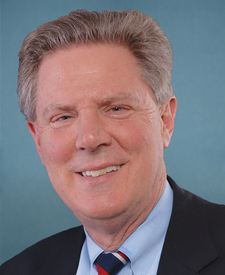
Frank Pallone, Jr.
NJ-6 • Democrat
39 years in Congress (first took office 1987)
Sign in and give your stance on bills to see your alignment score with this member.
What Frank Pallone, Jr. said
- Floor speechNov 9, 2026NRC STAFF PAY ALIGNMENT ACT
Mr. Speaker, I yield such time as he may consume to the gentleman from New Jersey (Mr. Menendez), the sponsor of the bill.
Source → - Floor speechNov 9, 2026NRC STAFF PAY ALIGNMENT ACT
Mr. Speaker, I yield myself such time as I may consume. Mr. Speaker, nuclear energy plays a vital role in delivering carbon-free power to our Nation's growing power grid. In an era of increasing demand for electricity, new nuclear reactors can provide clean energy around the clock, but only if they are safe. The guarantee of safety comes from the hardworking employees at the Nuclear Regulatory Commission, our Nation's nuclear safety regulator. They ensure that new proposed reactors will be safe, while also confirming that existing reactors are abiding by safety standards and not taking shortcuts. They are the safety cops on the beat, and they are extremely important. Unfortunately, the NRC's workforce has dwindled over the past few years. Attacks by DOGE and the rest of the Trump administration, combined with the reorganization of the Commission, have resulted in the NRC losing over 10 percent of its workforce, many from senior roles. That is on top of an agency workforce that was already shrinking, despite a growing need. The reality is if the Trump administration wants to accomplish its goal of moving nuclear power forward, it is going to need more safety regulators, not fewer. In a new wave of reactor or fuel cycle facility application, if that occurs in the future, the NRC will need more staff to analyze those applications and to ensure that those facilities stay safe once they are built. Mr. Speaker, 2 years ago, when we passed the ADVANCE Act into law, we recognized this problem. Then-Ranking Member DeGette of the Energy Subcommittee authored language that would give the NRC immense flexibility in its hiring and compensation authorities to attract and retain staff. Unfortunately, the NRC has been slow to implement the new authority. Furthermore, the attacks on the Commission over the past 2 years have disproportionately impacted the most senior civil servants who were excluded from the ADVANCE Act's reforms. Mr. Speaker, H.R. 9614 fixes this problem. It enhances the ADVANCE Act's hiring authorities by allowing the NRC to grant a 10-percent pay increase to Senior Executive Service employees. Those are the highest ranking, nonpolitical civil servants. These are the employees whose expertise and leadership will be the most important if the NRC sees an uptick in applications and facilities that it oversees. That fixes one-half of the problem, but the other issue is that the NRC has been slow to implement the ADVANCE Act's existing authorities due to some questions around congressional intent. We can't legislate that problem away, but I note for the record that it was never Congress' intention that the ADVANCE Act authorities could only be applied to a broad class of employee or to every single employee in a specific role. Those authorities and the authorities in this bill were designed to give the NRC maximum flexibility and not simply act as a blunt tool. Mr. Speaker, I thank Representative Menendez for his work in authoring this bill. I urge all of my colleagues to support it, and I reserve the balance of my time.
Source → - Floor speechNov 9, 2026NRC STAFF PAY ALIGNMENT ACT
Mr. Speaker, I urge support for Mr. Menendez' bill on a bipartisan basis, and I yield back the balance of my time.
Source → - Floor speechNov 9, 2026NUCLEAR ADVISORY COMMITTEE REFORM ACT
Mr. Speaker, I yield myself such time as I may consume. Mr. Speaker, H.R. 9613, the Nuclear Advisory Committee Reform Act, alters the scope and organization of the Nuclear Regulatory Commission's Advisory Committee on Reactor Safeguards, the body that provides independent technical expertise on nuclear licensing. Now, 73 years ago, the Atomic Energy Commission created the ACRS, an expert body meant to enhance the quality of safety and environmental reviews of applications for nuclear licenses. Soon after its establishment, Congress passed a law enshrining the ACRS in statute and requiring that it review all applications for commercial nuclear power plants to ensure the safety of what was at the time a completely new technology. Seven decades later, the landscape has significantly changed. Nuclear energy is no longer novel. More importantly, there have been generations of nuclear experts that now staff the NRC, in contrast to the small handful of experts who could inform the work of the old Atomic Energy Commission in the aftermath of World War II. But the requirement that the ACRS review every single reactor has remained the same. But at the same time, getting rid of the ACRS altogether, as some have suggested, would be wildly irresponsible. We are seeing a new generation of nuclear reactors, many with new design elements or aspects that have never been tested. Independent technical review is vital for public confidence in the safety of these reactors, and that is increasingly important at a time when the NRC itself is under attack and becoming more political. Any alterations to the ACRS must balance a need for efficiency with a need not to disrupt an organization that has helped keep us safe for nearly 75 years. I think this version of H.R. 9613 before us strikes that balance. It removes the requirement that the ACRS review each application, while requiring that the ACRS review the subset of applications that raise unique, novel, or noteworthy issues. Critically, it keeps the ACRS itself in charge of making the decision about what is unique, novel, or noteworthy, not the NRC. The ACRS retains its ability to investigate issues other than reactor applications that deserve its attention as well. So the idea is to focus the ACRS on what matters most--issues that have not come up before that are tricky and can benefit from a unique technical viewpoint, and this viewpoint has been useful in the recent past. The ACRS has contributed to recent reviews of the first-ever small modular reactor and the first-ever restart of a nuclear power plant. This bill will help the ACRS continue its important work into a new generation of reactors, letting its experts focus on the highest important issues and ensuring that those experts are heard in the licensing process. So I thank Chairman Guthrie and Representative Harshbarger for their willingness to compromise and find a path forward for the ACRS that works for everyone. I intend to support the bill, and I reserve the balance of my time.
Source → - Floor speechNov 9, 2026NUCLEAR ADVISORY COMMITTEE REFORM ACT
Mr. Speaker, once again, I urge support for this bill on a bipartisan basis, and I yield back the balance of my time.
Source → - Floor speechNov 9, 2026AMERICAN ENRICHMENT DEPLOYMENT ACT
I have no further speakers. I am prepared to close, and I reserve the balance of my time.
Source → - Floor speechNov 9, 2026AMERICAN ENRICHMENT DEPLOYMENT ACT
Mr. Speaker, I yield myself such time as I may consume. Mr. Speaker, there has been a renewed interest in nuclear power that could lead to a new generation of clean American nuclear energy. Unfortunately, there is a large barrier in the way, and that is we simply do not have enough fuel for the hypothetical reactors. Since the 1990s, we have seen a reduction in American enrichment capacity as we spent decades importing enriched uranium that had formerly resided in Soviet nuclear warheads. In the intervening years, Russia expanded its enrichment capabilities far beyond its domestic needs and eventually came to dominate the global enriched uranium market, including for American reactors. After Russia's invasion of Ukraine, we realized how vulnerable our supply chains were. I am proud the Energy and Commerce Committee led the way on getting several vital pieces of legislation signed into law. One law bans the importation of Russian uranium, providing certainty to the American domestic enrichment industry. Another authorized programs at the Department of Energy that are designed to inject funding into this sector and quickly enable expansion of domestic enrichment facilities. Barriers still remain to a healthy domestic enrichment industry, especially slowdowns to licensing enrichment facilities. This bill, H.R. 9612, the American Enrichment Deployment Act, addresses those licensing barriers in a few ways. First, it makes the process to license an enrichment facility identical to the process to license other fuel cycle facilities, like uranium conversion or fuel fabrication facilities. Second, the bill explicitly allows any developer of an enrichment facility to start constructing their facility before receiving an NRC license. Uranium enrichment facilities are essentially large warehouses for centrifuges, and developers need plenty of time to construct all the nonnuclear components of the facility. There is no reason they shouldn't be able to start construction just like any other building or project could. We amended the bill in the Energy and Commerce Committee, and I think it is very important to highlight a few of the changes that were made that are included in the version of the bill that we are going to be voting on today. The bill is now crystal clear. The National Environmental Policy Act, better known as NEPA, still applies to enrichment facilities; anyone has the right to request a hearing on a facility; and the NRC still has all its normal rights to conduct inspections. All the safeguards we rely on to keep our homes and communities safe still apply. Any developer's decision to start construction before they receive a license is truly at their own risk. The NRC is forbidden from considering whether or not a developer has started construction when making a decision about whether to approve or deny a license. A developer cannot complain that they have spent millions of dollars if their license is denied. After all, it is their choice alone to spend money on early construction. This last change was made in response to concerns expressed by a former Assistant Secretary for Nuclear Energy during a hearing we held on the bill in June. I am grateful for Chairman Guthrie's willingness to work together on this bill to make sure that we got it right. The Senate, Mr. Speaker, has unanimously passed their own version of this bill. I look forward to working with my colleagues in both Chambers to find a path forward so a version of it that works for everyone can make its way to the President's desk. Mr. Speaker, I thank Dr. Schrier for her work as a co-lead of H.R. 9612. I urge my colleagues to support the bill, and I reserve the balance of my time.
Source → - Floor speechNov 9, 2026AMERICAN ENRICHMENT DEPLOYMENT ACT
Mr. Speaker, I urge support for this legislation on a bipartisan basis, and I yield back the balance of my time.
Source → - Floor speechNov 9, 2026DEPARTMENT OF ENERGY NUCLEAR TRANSPARENCY ACT
Mr. Speaker, I yield such time as she may consume to the gentlewoman from Florida (Ms. Castor), the sponsor of the bill.
Source → - Floor speechNov 9, 2026DEPARTMENT OF ENERGY NUCLEAR TRANSPARENCY ACT
Mr. Speaker, I yield myself such time as I may consume. Mr. Speaker, the vast majority of nuclear reactors built in the United States are licensed by the Nuclear Regulatory Commission, and that has been the case for over 50 years, ever since Congress decided that it was vital for transparency and public confidence in the nuclear industry that we separate the government agency responsible for regulating the safety of our Nation's nuclear fleet, the NRC, from the part of the government responsible for promoting nuclear energy, and that is the Department of Energy. Both of these agencies have a vital role to play. The Department of Energy is making investments in the reactor designs of the future and helping the fundamental basic research that will be vital for our Nation to stay competitive in the coming decades. Meanwhile, the NRC is responsible for ensuring that our Nation's operating reactors are safe and secure. As a part of DOE's mission to promote nuclear energy, Congress granted it a very limited authority to permit its own nuclear reactors. These reactors cannot be commercial reactors that sell electricity. They are typically novel reactor designs that are thousands of times smaller than the NRC's regulated reactors that power our communities and our homes. Unfortunately, while NRC has taken a very robust stance toward transparency around the licenses it issues and its rules, DOE has doubled down on secrecy. It changed its nuclear safety rules without alerting Congress, and it took far too long to be transparent about the reactor pilot program, which kicked off last year. The only way to build public confidence and trust that these DOE-authorized reactors are safe is through transparency, making authorizations, safety documents, and alterations to safety rules public. This bill, H.R. 9084, the Department of Energy Nuclear Transparency Act, brings a reasonable solution to the table. It would require DOE to make public announcements every time it changes its nuclear safety rules, issues a safety analysis for a proposed nuclear facility, or grants a proposed nuclear facility a formal authorization. It would also require the DOE to develop a public report detailing all of its authorization activities each year. These are vital transparency guardrails that can help ensure the success of DOE's nuclear programs, including its new Launch Pad initiative. However, if the Department and the national laboratories running the program are not fully dedicated to transparency, then their efforts are doomed to fail. This is a commonsense bill that we should all support. Mr. Speaker, I thank our Energy Subcommittee ranking member, Ms. Castor, for her leadership on this bill, and I urge my colleagues to support it. Mr. Speaker, I reserve the balance of my time.
Source → - Floor speechNov 9, 2026DEPARTMENT OF ENERGY NUCLEAR TRANSPARENCY ACT
Mr. Speaker, I would ask for bipartisan support of this legislation, and I yield back the balance of my time.
Source → - Floor speechNov 9, 2026EFFICIENT NUCLEAR LICENSING HEARINGS ACT
Mr. Speaker, I yield such time as she may consume to the gentlewoman from Washington (Ms. Schrier), who is the lead Democrat on this legislation.
Source → - Floor speechNov 9, 2026EFFICIENT NUCLEAR LICENSING HEARINGS ACT
Mr. Speaker, I yield myself such time as I may consume. Mr. Speaker, H.R. 5549, the Efficient Nuclear Licensing Hearings Act, would cut down on red tape by eliminating the need for the Nuclear Regulatory Commission to hold a hearing on an application for a license when no one asked for one, and these so-called mandatory hearings often cost applicants up to $4 million, costs that are often eventually passed on to American families across the Nation in their electric bills. Mandatory hearings, Mr. Speaker, date back to an era when we had not separated out the safety regulation responsibilities that now belong to the NRC from the policy of promoting nuclear energy that now belongs to the Department of Energy, and the mandatory hearing, was a tool that Congress thought necessary to maintain public confidence and trust in nuclear safety regulations, especially in an era before the Sunshine Act and environmental reviews. Thankfully, we live in a very different and much more transparent world today, so these mandatory hearings are not hearings in the sense that you might think, Mr. Speaker. Instead, they are purely paper proceedings that take months to complete happening between NRC staff and reactor developers, not the public. No public scrutiny or transparency is lost by getting rid of them. Instead, the NRC and its staff can focus on the issues in an application that really matters. The NRC recognized this and endorsed the idea 18 years ago. Importantly, this bill does not really touch another type of hearing at the NRC, contested hearings, where someone demands that the NRC investigate a specific component of a license application, and communities retain their rights to demand hearings and community meetings as part of the environmental and safety review processes, and that is completely untouched. Mr. Speaker, I thank Representative Schrier, the coauthor of this bill and the lead Democrat, for her work on this legislation. I urge my colleagues to support it, and I reserve the balance of my time.
Source → - Floor speechNov 9, 2026EFFICIENT NUCLEAR LICENSING HEARINGS ACT
Mr. Speaker, I ask for bipartisan support for this legislation, and I yield back the balance of my time.
Source → - Floor speechNov 9, 2026NUCLEAR REFUEL (RECYCLING EFFICIENT FUELS UTILIZING EXPEDITED LICENSING) ACT
Mr. Speaker, I yield myself such time as I may consume. Mr. Speaker, H.R. 3978, the Nuclear REFUEL Act, will potentially help us get more energy out of the spent nuclear fuel piled up at reactor sites across the Nation. The bill makes a simple tweak to the Atomic Energy Act, ensuring that future proposals to develop facilities to recycle or reprocess spent nuclear fuel are licensed similarly to other fuel cycle facilities. This is not a shortcut for reprocessing facilities. It just puts them on a level playing field with typical uranium enrichment facilities, mirroring an amendment Congress made to the Atomic Energy Act back in 1990. These facilities would still go through the Nuclear Regulatory Commission's licensing process and would be subject to NRC scrutiny. I also want to note two important features of this bill. The first is that the changes here do not apply to any facility that would isolate plutonium nor do they apply to export controls on reprocessing technologies. These important safeguards ensure that our current nonproliferation regime is kept safe and intact. I thank Representative Peters and Energy Subcommittee Chairman Latta for their bipartisan work on this bill, and I urge my colleagues to support it. I have no additional speakers. This is an important bill, and I would urge support on a bipartisan basis. I yield back the balance of my time, Mr. Speaker.
Source → - Extension of remarksNov 9, 2026RECOGNIZING JASON SHEA
Mr. Speaker, I rise today to pay tribute to Jason Alan Shea, who has served on the frontline of coastal resiliency development in his role of project manager for the U.S. Army Corps of Engineers (USACE) New York District. Jason is leaving this role of distinguished service with several accomplished projects directly protecting the coastline of the 6th Congressional District. Jason holds more than 30 years of experience delivering complex federal resources, including flood-risk-management and disaster response initiatives. Jason not only displays exceptional technical leadership, public service, and team performance--he sets the standard. Earlier in his career, he managed water-resource studies for the USACE Los Angeles District and practiced civil engineering consulting. Jason served as a Supervisory Civil Engineer with the USACE New York District, where he led planning and watershed programs, supervised staff across multiple disciplines and grade levels, and managed major Civil Works studies and post-disaster recovery efforts. He held temporary GS-14 leadership assignments as Branch Chief for the Sandy Planning Branch and as an HQUSACE North Atlantic Division Regional Integration Team Planner. It is undeniable that excellence in USACE operations nationwide are products of Jason's countless mentorship and career involvement. By the numbers, Jason has had oversight success in leading multidisciplinary Project Delivery Teams through the design, planning, and construction of high-profile infrastructure projects valued at up to $1 billion. Together, with Jason's instrumental partnership, Sea Bright's coastal renourishment and feasibility reevaluation effort has transformed the longevity of the Sea Bright coastline. A project my constituents fiercely support. His portfolio also includes the Passaic Tidal Coastal Project in Newark; the Minish Park Coastal Erosion Project; and multi-agency offshore borrow-area engineering and permitting studies. Jason has also served as Project Manager for Flood Plain Management Services, Planning Assistance to States, and Special Investigations programs. It is incredible to work with someone with a multifaceted work ethic. In times of national crisis, Jason has served as a national-level emergency manager supporting FEMA under Emergency Support Function No. 3. He has served as the Lead ESF No. 3 Representative at the FEMA Region 2 Regional Response Coordination Center and has deployed nationwide as a Deputy or Acting Team Leader, responsible for all USACE Planning and Response Teams on a national disaster. I will always appreciate Jason's incredible support during Hurricane Sandy. The teams covering debris removal, emergency power, temporary housing, infrastructure assessment, and restoration of critical public facilities exceeded expectations under Jason's leadership. Over time, Jason Shea has been recognized as Commander's Supervisor of the Year, Project Delivery Team of the Year, Planning Team of the Year, and multiple Humanitarian and Civilian Service Commendation Medals. These recognitions are truly well deserved Mr. Speaker, it should go without saying that the American people, New Jerseyans, and the people of the 6th Congressional District have been well served by Jason Shea. Even though he is moving on from his current role as Project Manager, I wish him best in his future endeavors and know that whatever path he chooses will be a successful one.
Source → - Extension of remarksNov 9, 2026RECOGNIZING THE HIGHLANDS LIONS CLUB 100TH ANNIVERSARY
Mr. Speaker, it is my honor to congratulate the Highlands Lions Club as it commemorates 100 years of service this year. The volunteers and community members will gather for a luncheon and recognition ceremony to honor the service organization's past and future. The Highlands Lions Club has been an integral part of the local community since its establishment and continues to uphold its mission to provide residents with community betterment and support. On October 28, 1926, the Highlands Lions Club officially chartered, making it one of New Jersey's earliest Lions chapters. Around the world, the Lions were part of an international movement for vision and blindness prevention following Helen Keller's influential 1925 address. This organization's first event debuted at Bahrs Landing and drew over 100 attendees, including Lions District Governor Carl Banwart. The night featured speeches, musical performances, and installation of the original officer slate. From the 1930s to the 1950s, recurring fundraising events and themed social gatherings formed lasting community traditions. Today, the Highlands Lions Club continues to have a special social, recreational, and charitable presence in Highlands. Throughout its history, various service projects by the Highlands Lions Club's longstanding members have had meaningful influence on local civic development. In 2007, the Monmouth County Board officially dcsignatcd ``Frank C. White Day'' in recognition of Mr. White's contributions as previous President and District Governor of Lions Club International. Mr. White notably secured a significant Lions Clubs International matching grant that provided educational materials to be accessible to Lions network chapters nationwide. For one hundred years, the Highlands Lions Club has developed community programs aligned with the global organization's key mission to serve others. This includes supporting local students with educational scholarships, holding annual holiday donation collections, funding eye exams and screenings for children, distributing eyeglasses worldwide, and engaging in youth mentorship to the Highlands Leos. Mr. Speaker, once again, please join me in marking the 100th anniversary of Highlands Lions Club. Their continued service is truly deserving of this body's recognition.
Source →
Sponsored
None loaded