No donor data for Alex Padilla yet.
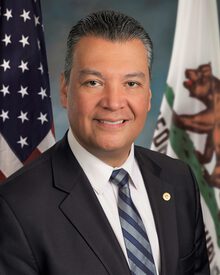
Alex Padilla
Senator, CA • Democrat
5 years in Congress (first took office 2021)
Sign in and give your stance on bills to see your alignment score with this member.
What Alex Padilla said
- Floor speechNov 12, 2026REMEMBERING DOLORES HUERTA
Madam President, few individuals have done more to advance the cause of workers' rights, of women's rights, or of civil rights in America than Dolores Huerta. A trailblazer in the labor movement, California and our entire Nation lost a remarkable leader when Dolores passed away last month at the age of 96. But even as we mourn her loss, we also celebrate the legacy she leaves behind; a legacy that not only transformed the labor movement but inspired generations of Americans to stand up and fight for a more just and equitable future. It is a legacy that began not in a union hall or in the fields, but in the elementary school classroom where, for a brief time, Dolores worked as a young teacher. Growing up in Stockton, CA, Dolores was always encouraged by her mother to get involved in her community. But watching many of her students arriving to school hungry and shoeless as a 20-year-old teacher, Dolores came to believe that she ``could do more by organizing farm workers than by trying to teach their hungry children.'' So, after a year in the classroom, she made a decision that would change the course of California history: She left teaching and dedicated herself to organizing farmworkers in California's Central Valley. As a cofounder of the United Farm Workers, Dolores helped give voice to thousands of Americans who had spent generations laboring in the fields without the wages, protections, or dignity they deserved. During the Delano Grape Strike, she helped unite farmworkers in the fight for better working conditions and inspired millions of Americans to join a nationwide boycott of California-grown grapes. Before long, what first began as a struggle in the fields of California soon grew into a movement that reached across the country. Together, workers forced an industry to answer for its mistreatment of the people whose labor made it possible. And eventually, through their efforts, these workers secured a major victory with the adoption of the Agricultural Labor Relations Act of 1975, California's first farm-labor law guaranteeing workers the right to organize, bargain collectively, and negotiate for better wages and working conditions. But for Dolores, the fight for justice never stopped at the edge of a farmworker's field. She understood that the struggles facing working families are deeply connected and intertwined. The fight for fair wages is also the fight to put food on the table and afford a roof over a family's head. The fight for workers' protections is also the fight for the ability to care for a loved one without risking a paycheck and to work and live free of harassment and discrimination. This is what guided Dolores her entire life. Fighting for immigrant's rights, she spent months building support for the Immigration Reform and Control Act of 1986. A member of the Feminist Majority Foundation, she championed women's equality, reproductive freedom, and equal pay. And through the Dolores Huerta Foundation, she continued empowering communities to fight for better healthcare, stronger schools, and the right of every eligible American to vote. Invaluable fights, all of them. But fights that also came at tremendous personal cost as, throughout her life, Dolores faced sexism, abuse, arrests, violence, and more. Twenty-two times she was arrested--most recently at 89 years old. Once, while being arrested during a 1988 protest, she was beaten so badly by police that she was left hospitalized with broken ribs and a ruptured spleen. And this March, at the age of 96, Dolores tapped once more into her bottomless well of courage, to come forward and share another deeply painful part of her story by exposing the sexual abuse she endured at the hands of her organizing partner Cesar Chavez. Even after decades of silence, she refused to let fear stand in the way of the truth. Through it all, Dolores never stopped fighting. She brought extraordinary courage, resolve, and devotion to her work, refusing to ever take no for an answer. It is why her iconic rallying cry, ``Si, se puede''--Yes, we can--became a call to action for generations of people who believed a better future was possible, even when the odds are stacked against them. It is no wonder that every April 10, we celebrate Dolores Huerta Day throughout California in her honor. But her legacy is not confined to just 1 day, one State, or one movement. It lives on in every worker who stands up for fair treatment, in every woman who demands an equal voice, in every immigrant who fights for dignity and every community that comes together demanding change. Dolores once said, ``Every moment is an organizing opportunity, every person a potential activist, and every minute a chance to change the world.'' Those words were more than a rallying cry. They were a reflection of who Dolores was and how she lived her life. From the young teacher who saw children hungry and ill-clothed, to the organizer who helped transform an entire industry, to the 96-year-old activist who refused to ever quit speaking out, Dolores never stopped believing in the power of ordinary people to bring about extraordinary change. And she showed us that a better world does not simply happen. It is built by those willing to stand together, those willing to organize, and those willing to demand something better. Now, it is up to all of us to carry that torch forward, to keep organizing, to keep fighting, and to keep believing, as Dolores taught us, that ``Si, se puede.'' Angela and I send our deepest condolences to the Huerta family, to her brothers and sisters in labor, and to all the lives she touched through her extraordinary life.
Source → - Floor speechNov 10, 2026STATEMENTS ON INTRODUCED BILLS AND JOINT RESOLUTIONS
Mr. President, I rise to introduce the End Veterans Homelessness Act. This legislation seeks to ensure that more veterans who have bravely served our country have a roof over their heads. On any given night in America, nearly 32,500 veterans experience homelessness. To address this need, Congress created the HUD-VASH program to distribute vouchers to veterans, prioritizing those with chronic mental illnesses or substance use disorders. Although Congress allocates funding for 100,000 HUD-VASH vouchers each year, nearly 24,500 of these vouchers go unused. This gap in voucher utilization needlessly results in veterans living without a home. The End Veterans Homelessness Act would modernize the Housing and Urban Development-Veterans Affairs' Supportive Housing, (HUD-VASH) program by enhancing efficiency, broadening program eligibility, and increasing oversight. Under this Act, HUD-VASH eligibility would be expanded to include unhoused veterans and their families who are experiencing or at risk of homelessness and veterans who do not require intensive supportive services, while preserving priority for chronically homeless veterans and veterans with chronic disabilities. This bill would also allow veterans currently receiving housing assistance through other Federal programs to transfer into HUD-VASH, freeing up limited housing subsidies for nonveterans in need. In addition, this bill would allow public housing authorities to cover certain administrative fees and require HUD to submit an annual report to Congress on voucher utilization and barriers to access. The End Veterans Homelessness Act is a critical step towards ensuring that veterans--especially those with chronic mental illnesses or substance use disorders--can access the help they need. Veterans deserve to have a home, and our government has a responsibility to ensure that its resources are used to promote veterans' well-being. By passing this legislation, we can take meaningful action to honor veterans' service to our Nation. I would like to thank Senators Warren and Blumenthal for coleading this bill with me, and Representatives Takano, Waters, and Levin for leading this legislation in the House. I hope that our colleagues will join us to cut redtape to make it easier and faster to house veterans experiencing or at risk of homelessness and their families. I look forward to working with my colleagues to pass the End Veterans Homelessness Act as swiftly as possible.
Source → - Floor speechNov 10, 2026Introductory Statement on S. 5715
Mr. President, I rise to introduce the End Veterans Homelessness Act. This legislation seeks to ensure that more veterans who have bravely served our country have a roof over their heads. On any given night in America, nearly 32,500 veterans experience homelessness. To address this need, Congress created the HUD-VASH program to distribute vouchers to veterans, prioritizing those with chronic mental illnesses or substance use disorders. Although Congress allocates funding for 100,000 HUD-VASH vouchers each year, nearly 24,500 of these vouchers go unused. This gap in voucher utilization needlessly results in veterans living without a home. The End Veterans Homelessness Act would modernize the Housing and Urban Development-Veterans Affairs' Supportive Housing, (HUD-VASH) program by enhancing efficiency, broadening program eligibility, and increasing oversight. Under this Act, HUD-VASH eligibility would be expanded to include unhoused veterans and their families who are experiencing or at risk of homelessness and veterans who do not require intensive supportive services, while preserving priority for chronically homeless veterans and veterans with chronic disabilities. This bill would also allow veterans currently receiving housing assistance through other Federal programs to transfer into HUD-VASH, freeing up limited housing subsidies for nonveterans in need. In addition, this bill would allow public housing authorities to cover certain administrative fees and require HUD to submit an annual report to Congress on voucher utilization and barriers to access. The End Veterans Homelessness Act is a critical step towards ensuring that veterans--especially those with chronic mental illnesses or substance use disorders--can access the help they need. Veterans deserve to have a home, and our government has a responsibility to ensure that its resources are used to promote veterans' well-being. By passing this legislation, we can take meaningful action to honor veterans' service to our Nation. I would like to thank Senators Warren and Blumenthal for coleading this bill with me, and Representatives Takano, Waters, and Levin for leading this legislation in the House. I hope that our colleagues will join us to cut redtape to make it easier and faster to house veterans experiencing or at risk of homelessness and their families. I look forward to working with my colleagues to pass the End Veterans Homelessness Act as swiftly as possible.
Source → - Floor speechNov 9, 2026STATEMENTS ON INTRODUCED BILLS AND JOINT RESOLUTIONS
Mr. President, I rise today to introduce a bill to transfer a total of 847 acres of Federal land in San Diego County, CA, currently administered by the Bureau of Land Management, BLM, and the U.S. Forest Service, USFS, to be held in trust for the Barona Band Mission Indians. The transfer of these three parcels would unify the Tribe with their ancestral home, which has since been fragmented, to allow for land management consistent with the Tribe's cultural traditions and practices. The Tribe has also worked with BLM and USFS to preserve existing rights-of-way, public recreational access and public trails, emergency access for Federal personnel, and existing water rights and service agreements. The Tribe was forced out of their first federally established reservation when the city of San Diego bought a portion of the Capitan Grande Reservation from the Federal Government to build a reservoir. After the reservation was flooded, the Tribe purchased the Barona property in 1932 to create their current reservation. The Barona Tribe and the Viejas Band of Kumeyaay Indians now share a joint-trust patent to jointly manage the remaining 15,000 acres of the Capitan Grande Reservation surrounding the reservoir. The proposed parcels in this bill are adjacent to the existing 7,500 acre Barona Indian Reservation near Ramona and have deep cultural and historical significance to the Tribe. Adding this land into trust would act as a bridge--connecting the land between the Barona Indian Reservation and the Capitan Grande Reservation. This legislation would allow the Tribe to better protect sacred sites, traditional use areas, and cultural resources on ancestral land. I want to thank Senator Schiff for cosponsoring this legislation and Representative Darrell Issa for introducing companion legislation in the House.
Source → - Floor speechNov 9, 2026Introductory Statement on S. 5694
Mr. President, I rise today to introduce a bill to transfer a total of 847 acres of Federal land in San Diego County, CA, currently administered by the Bureau of Land Management, BLM, and the U.S. Forest Service, USFS, to be held in trust for the Barona Band Mission Indians. The transfer of these three parcels would unify the Tribe with their ancestral home, which has since been fragmented, to allow for land management consistent with the Tribe's cultural traditions and practices. The Tribe has also worked with BLM and USFS to preserve existing rights-of-way, public recreational access and public trails, emergency access for Federal personnel, and existing water rights and service agreements. The Tribe was forced out of their first federally established reservation when the city of San Diego bought a portion of the Capitan Grande Reservation from the Federal Government to build a reservoir. After the reservation was flooded, the Tribe purchased the Barona property in 1932 to create their current reservation. The Barona Tribe and the Viejas Band of Kumeyaay Indians now share a joint-trust patent to jointly manage the remaining 15,000 acres of the Capitan Grande Reservation surrounding the reservoir. The proposed parcels in this bill are adjacent to the existing 7,500 acre Barona Indian Reservation near Ramona and have deep cultural and historical significance to the Tribe. Adding this land into trust would act as a bridge--connecting the land between the Barona Indian Reservation and the Capitan Grande Reservation. This legislation would allow the Tribe to better protect sacred sites, traditional use areas, and cultural resources on ancestral land. I want to thank Senator Schiff for cosponsoring this legislation and Representative Darrell Issa for introducing companion legislation in the House.
Source →
Sponsored
None loaded