No donor data for Gary J. Palmer yet.
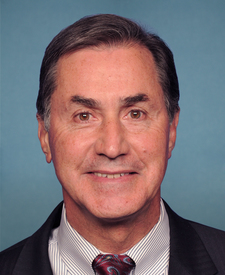
Gary J. Palmer
AL-6 • Republican
11 years in Congress (first took office 2015)
Sign in and give your stance on bills to see your alignment score with this member.
What Gary J. Palmer said
- Floor speechNov 11, 2026SALUTING OUR VETERANS
Mr. Speaker, I would like to associate myself with the remarks of Congressman Moore in regard to Burgess Owens. He is one of a kind and truly a class act. Mr. Speaker, I rise today to commemorate Veterans Day and honor the brave men and women who have served in the United States Armed Forces. Throughout our Nation's history, generations of Americans have answered the call to defend our country, often at great personal sacrifice. From the battlefields to the American Revolution to the conflicts of today, our veterans have demonstrated extraordinary courage and willingness to put the needs of the country above their own. Winston Churchill once said, it is not enough that we do our best; sometimes we must do what is required. Our veterans and those serving in our military forces today understand this. When their Nation called, they answered, putting service above themselves and placing the freedoms of their fellow Americans ahead of their own comfort and safety. There have been many times that Americans have sacrificed themselves for our country. In the 250 years of our history, over 1.3 million have laid down their lives for our benefit. One such occasion was June 6, 1944, when American and Allied Forces stormed the beaches of Normandy in what would become one of the most consequential military operations in world history. Operation Overlord ended up being the turning point in World War II, paving the way for the liberation of France and eventually the defeat of Nazi Germany. We know how impactful that day was, but then, in the moments before they hit the shore, those soldiers had no idea what that day had in store. They did not know whether they would survive, whether their mission would succeed, or whether they would ever see their families again. But when the landing craft reached the beach and the ramps came down, those men ran headlong into hell. Over 4,000 allied troops were killed that day, including over 2,500 Americans. As I have thought of those losses, I couldn't help but wonder--who was the first that morning? Did he get off the landing craft? Did his foot ever touch water or sand? When you consider this, you have to be in awe of the courage of that young American soldier. But not just him, the guy behind him who kept going, the guy behind that guy, and the guys behind them that kept charging into that firestorm of lead and fire. Each of those men faced a choice in a moment of unimaginable danger. They could not know the outcome of the battle, but they understood the importance of their mission and what was at stake. Those young men understood what it meant to do what is required. They carried on with courage and determination. Without their commitment, the world we know today would look drastically different. As I said, on that day, over 2,500 Americans laid their lives on the altar of freedom never knowing what they accomplished or experiencing the profound gratitude of those for whom they had died. As this year marks America's 250th anniversary, we are reminded that our Nation and our freedoms would not have endured without the courage and sacrifice of those who have worn the uniform. Our veterans have been willing to stand in harm's way so that future generations might live in freedom. That is a legacy we must never take for granted and a sacrifice we must never forget. There are over 400,000 veterans living in Alabama. As of 2025, 394 World War II veterans and among those, one is over 107 years old. Mr. Speaker, I thank every veteran for their service and unwavering commitment to our country and their willingness to do what is required.
Source → - Floor speechNov 11, 2026HONORING THE MEMORY OF WALLACE D. MALONE, JR.
Mr. Speaker, I rise today to honor the memory of my friend, Wallace D. Malone, Jr. Malone was born August 3, 1936, in Dothan, the son of Wallace D. Malone, Sr., and Alice Mae Dee Malone. Wallace earned his bachelor's degree in business in 1957 from the University of Alabama. He earned an MBA degree in 1959 from the Wharton School of Business at the University of Pennsylvania. I first met Wallace in the early 1990s when he was chairman and CEO of SouthTrust Bank, which he founded. Wallace was a legendary figure in banking, building SouthTrust into the largest financial organization in Alabama and one of America's Fortune 500 companies. His family entered banking over 100 years ago in one office in the heart of Dothan, Alabama. Wallace was inducted into the Alabama Academy of Honor in 1986. In 1996, The Birmingham News named Wallace CEO of the Year, and in 2001, Wallace was inducted into the Alabama Business Hall of Fame. Malone invested his time and treasure in his community and State. He served on numerous boards supporting healthcare, business, and numerous nonprofits, as well as serving on the Federal Reserve Branch in Birmingham. He also supported education through the Malone Family Foundation, and he was one of the early and longtime supporters of the Alabama Family Alliance, later the Alabama Policy Institute, the think tank that I had the honor of leading. Wallace was, first and foremost, a man of faith and a family man. He and his wife, Ocllo, were married 48 years, parents to 6 children, 17 grandchildren, and 9 great-grandchildren. Wallace was a dear friend and counselor to me and to so many others. He was always generous in sharing his insights and wisdom, and I always enjoyed my time with him. He was truly one of a kind.
Source → - Floor speechNov 10, 2026RECOGNIZING JOHN H. WATSON
Mr. Speaker, I rise today to recognize the life and legacy of my friend John Watson of Dothan, Alabama. John was born February 12, 1938, in the small rural community of Skipperville. He was the first in his family to attend college, and he earned a degree in mechanical engineering from Auburn University. It should be noted that the University of Alabama offered him a football scholarship, which he declined because Auburn had a superior engineering school. He was a co-op student, working at the Redstone Arsenal, and he was in the ROTC program at Auburn. He entered the United States Army Corps of Engineers as a second lieutenant, and he served during the Berlin crisis. He returned to Dothan and took a job as an engineer for Smith's Inc. In 1966, he and two other employees bought 47 percent interest in the company from James M. Smith, and 4 years later, they bought the rest of the company, a transaction financed by Mr. Smith. While John was an excellent engineer, he was also an astute businessman, building or owning numerous other businesses, including Aladan, which became the largest latex glove producer in the United States, and USA Yeast, a state-of-the-art baker's yeast plant producing one-seventh of total U.S. yeast demand. His success as an engineer and businessman was recognized when he was inducted into the Alabama Business Hall of Fame in 2004 and the Alabama Engineering Hall of Fame in 2008. He was a man of faith. He served as an elder in the Evergreen Presbyterian Church, and he served his community and State on numerous boards, including the chairman of the Alabama Ethics Commission. He was a devoted supporter of his alma mater, Auburn University, where he and his wife established the John H. and Gail P. Watson Scholarship Endowment. He was a major supporter of Auburn athletics. Auburn University honored John by naming their premier volleyball facility the John H. Watson Fieldhouse. He was a faithful husband to his wife, Gail, and devoted father and grandfather to his two children and grandchildren. Mr. Speaker, I am very grateful to have had John as a friend. I miss him. I think of him often. I am humbled to honor his legacy. In the spirit of our friendship, I conclude with: War Eagle.
Source → - Floor speechNov 9, 2026AMERICAN ENRICHMENT DEPLOYMENT ACT
Mr. Speaker, I rise in support of H.R. 9612, the American Enrichment Deployment Act, and I thank the gentleman from South Carolina (Mr. Fry) for its introduction. Advanced reactors can't run without enriched fuel, and enrichment is where our supply chain depends most on foreign suppliers, including Russia. In 2024, Congress passed the Prohibiting Russian Uranium Imports Act, with the dual focus of eliminating our reliance on Russian uranium while leveling the playing field for domestic uranium producers to be economically competitive and revitalizing domestic uranium production. Since that time, however, Russian uranium has still been flowing into the United States under a waiver process, and there has been a concerning uptick in Chinese uranium exports to the United States. We can pass all the reactor bills we want, but without domestic enrichment capacity, they won't help. Under current practice, a company waits for the final license before breaking ground, so any given project may sit idle for years. This bill lets developers begin limited construction before the license is final and at their own financial risk. If the NRC says no, the company loses its money--the taxpayer doesn't. Environmental review, hearing rights, and NRC's power to deny the license all stay in place. Some may call this a shortcut, but it works the other way around. By having industry take on all the risk, it incentivizes high-quality projects and a reason to meet standards. America must take control of its nuclear fuel supply chain and reduce our dependence on foreign sources of uranium enrichment. Nuclear energy is essential to meeting our growing energy demands, strengthening our national security, and maintaining our competitive edge. This legislation takes an important step toward those goals by allowing uranium enrichment facilities to begin construction while their Federal licensing process is underway. It will help reduce unnecessary delays, encourage private investment, and accelerate the development of critical domestic infrastructure. We cannot afford to outsource our energy security or allow unnecessary regulatory delays to stand in the way of American innovation. I am proud to support Congressman Fry's American Enrichment Deployment Act, and I encourage my colleagues to do the same. Mr. Speaker, all of these bills presented for suspension today are about one question: Can we build the nuclear infrastructure that we need and do it in years instead of decades and can we do in a commercially scaleable, affordable, and transparent way? These bills fix part of that process and cut down on unnecessary red tape. They don't lower a single safety standard. They remove steps that add delay while maintaining high safety standards with increased transparency. Mr. Speaker, I urge my colleagues to support each of these bills.
Source → - Floor speechNov 9, 2026DEPARTMENT OF ENERGY NUCLEAR TRANSPARENCY ACT
Mr. Speaker, I rise in support of the bill from the gentlewoman from Florida (Ms. Castor). The Department of Energy is increasingly authorizing test and demonstration reactors, and that is a good way to speed up innovation. Public confidence matters, and it depends on the public being able to see how those decisions get made. That is why I rise to speak in favor of Representative Castor's bill, the Department of Energy Nuclear Transparency Act. This bill promotes accountability without comprising classified information or sensitive national security interests by establishing four major transparency requirements. These include requiring the Department of Energy to publish public announcements of changes to nuclear safety standards, preliminary or final documented safety analyses, and information regarding agreements authorizing covered DOE nuclear facilities. Additionally, the bill requires annual reporting to Congress. We can advance American nuclear energy while maintaining public trust, protecting our communities, and ensuring responsible stewardship of these critical facilities. This bill does not add approval steps, and it does not change the DOE's authority. It simply increases transparency without turning it into a second licensing process. Mr. Speaker, I am happy to support Representative Castor's bill, and I urge my colleagues to do so as well.
Source →
Sponsored
None loaded
Voted yes
Voted no
None recorded