No donor data for Melanie A. Stansbury yet.
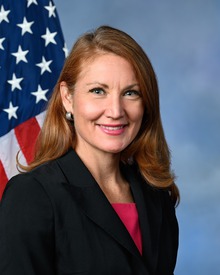
Melanie A. Stansbury
NM-1 • Democrat
5 years in Congress (first took office 2021)
Sign in and give your stance on bills to see your alignment score with this member.
What Melanie A. Stansbury said
- Floor speechNov 17, 2026SOUTH DAKOTA WATER FEASIBILITY STUDIES ACT
Mr. Speaker, I yield myself such time as I may consume. Mr. Speaker, what we have before us is a package of three Republican bills. As introduced, the language includes explicit authorizations for appropriations totaling $30 million for three new Bureau of Reclamation feasibility studies. I understand that these projects are priorities for Senator Thune and our colleague Representative Johnson. I believe feasibility studies are an important step in ensuring that water infrastructure projects have been sufficiently studied and determined to be beneficial. Putting this one bill aside, though, I would be remiss to not express my frustration. Like Senator Thune and Representative Johnson, there are a number of Democratic bills that also address critical needs in our districts. While leadership has blocked consideration of these bills time and time again, they have now looked to include new Federal spending for these specific projects. In fact, when it comes to H.R. 9785, which would allow for new spending for these three new feasibility studies, the majority has suddenly found a path forward. Despite these frustrations with the ``rules for thee but not for me'' approach that the majority has taken, Democrats on the Committee on Natural Resources have worked with our colleagues to strengthen the language and protect the taxpayers. I hope that the majority will continue to work with us to advance similar legislation as we move forward to support other districts across the country. Mr. Speaker, I urge my colleagues to support this legislation, and I yield back the balance of my time.
Source → - PIT RIVER LAND TRANSFER ACT OF 2025
Mr. Speaker, I urge my colleagues to support the legislation, and I yield back the balance of my time.
Source → - PIT RIVER LAND TRANSFER ACT OF 2025
Mr. Speaker, I yield myself such time as I may consume. Mr. Speaker, H.R. 2400 would place lands currently managed by the U.S. Forest Service in northern California within Shasta County into trust for the benefit of the Pit River Tribe. These lands hold historic and cultural significance to the Tribe, which has worked tirelessly to reclaim these lands. This bill presents the opportunity for the Tribe to manage these lands for economic development, education, environmental stewardship, and cultural needs. Passing this bill would also be a meaningful tribute to the sponsor of the bill, our dear former colleague Doug LaMalfa, who we sadly lost earlier this year. The House passed a previous version of this legislation earlier this Congress. Since then, the Senate has made technical corrections, including updates to the acreage and associated map. Mr. Speaker, I support the amendments made by the Senate and urge my colleagues to once again support this legislation, and I reserve the balance of my time.
Source → - Floor speechNov 17, 2026RENEWING THE AFRICAN AMERICAN CIVIL RIGHTS NETWORK ACT
Mr. Speaker, I urge my colleagues to support this legislation, and I yield back the balance of my time.
Source → - Floor speechNov 17, 2026RENEWING THE AFRICAN AMERICAN CIVIL RIGHTS NETWORK ACT
Mr. Speaker, I yield myself such time as I may consume. Mr. Speaker, H.R. 9269 would reauthorize the African American Civil Rights Network, a program administered by the National Park Service, for an additional 7 years. Among its many important functions, the African American Civil Rights Network shares the stories of the people, places, and events associated with the civil rights movement. It ensures that the important history of the movement is honored and accessible to all Americans. The network includes 29 States with designated sites open to visitors. These sites are hubs for heritage-based tourism and provide education on the civil rights movement. At the Natural Resources Committee hearing on this bill, we heard powerful and important testimony about how the program authorized by this bill supports research, public education, heritage tourism, and, perhaps most importantly, connecting all Americans to the powerful story of the United States and our civil rights movement. At a time when we have seen attempts to try to rewrite history, particularly in our national parks, it is more critical than ever to support the preservation of Black and African-American history. Mr. Speaker, I thank Representative Clyburn for his leadership and his relentless work in support of this bill and the bipartisan support it has received, including 10 bipartisan cosponsors. It signals a broad agreement that we must continue to learn from our past and continue to support our communities moving forward. Mr. Speaker, I yield such time as he may consume to the gentleman from South Carolina (Mr. Clyburn), the sponsor of this bill.
Source → - Floor speechNov 17, 2026EARTH MRI REAUTHORIZATION ACT OF 2026
Mr. Speaker, I yield myself such time as I may consume. I rise in support of the Earth MRI Reauthorization Act of 2026. The Earth Mapping Resources Initiative, or Earth MRI, was established in 2019 to modernize geologic, geophysical, and geochemical mapping across the United States through partnerships with States, Tribes, academia, and industry. The program provides the high-quality data we need to better understand the critical mineral resources beneath our feet. It is an essential program in helping to develop a secure domestic critical mineral supply chain and understand these resources. In 2021, Democrats secured additional funding for the program in the Infrastructure Investment and Jobs Act, which allowed Earth MRI to scale up. It provided $320 million over 5 years and allowed the USGS and State geologic surveys to map new regions of the country and to collect modern data in regions where existing geologic maps are decades old. With the capacity built through this investment, Earth MRI data are now being used to understand critical mineral potential not only below the ground but above the ground in mine waste sites, contributing to the USGS Mine Waste Inventory published in January, as we seek to be good stewards of our lands and make full use of the infrastructure and resources that are already accessible to us. However, the benefits don't stop at critical minerals. These data inform decisions on infrastructure and land-use planning; hazard assessments for earthquakes, landslides, volcanoes, and floods; and water resources management. H.R. 9640 would not only reauthorize a portion of this investment but also build upon it by creating opportunities to further extend Earth MRI's value beyond mineral potential and provide foundational data supporting assessments of emerging energy resources like geothermal and geologic hydrogen. I will say the bill would reauthorize substantially less than the original $320 million provided in the infrastructure bill. At a time when demand for critical minerals is growing and the need for energy resources is greater than ever, finding sustainable resources and using science is critical to preserving our resources. Mr. Speaker, I thank my colleagues across the aisle for working with us on this critical investment in American science, and I urge our colleagues to support this bill. Mr. Speaker, I reserve the balance of my time.
Source → - Floor speechNov 17, 2026EARTH MRI REAUTHORIZATION ACT OF 2026
Mr. Speaker, I urge my colleagues to support this legislation, and I yield back the balance of my time.
Source → - Floor speechNov 17, 2026EARTH MRI REAUTHORIZATION ACT OF 2026
Mr. Speaker, I have no further requests for time, and I am prepared to close. I reserve the balance of my time.
Source → - Floor speechNov 17, 2026EARTH MRI REAUTHORIZATION ACT OF 2026
Mr. Speaker, I have no speakers, and I am prepared to close. Mr. Speaker, I reserve the balance of my time.
Source → - Floor speechNov 17, 2026CROSSETT EXPERIMENTAL FOREST ACT OF 2026
Mr. Speaker, I yield myself such time as I may consume. Mr. Speaker, this bill would authorize the U.S. Forest Service to convey the Crossett Experimental Forest in southwestern Arkansas to the State of Arkansas. Following the conveyance, Arkansas will be required to manage the land as the Crossett Experimental State Forest in accordance with all State laws applicable to the State forests. Additionally, the bill directs the State to use the land for forest research, education, and demonstration projects in a manner consistent with the historic research mission of the area and in conjunction with the University of Arkansas at Monticello and the University of Arkansas Division of Agriculture. If the State fails to use the land for these purposes, ownership of the land will revert back to the United States Forest Service. The Crossett Experimental Forest was established in 1933, and the forest is largely used to do forestry practices associated with pine species. The Forest Service has a longstanding partnership with the State of Arkansas and the university, and the conveyance authorized by this bill will improve management efficiency. I understand that moving this bill is a priority for the chairman, and I thank him and his staff for working with our team to ensure this bill could move on a bipartisan basis. That said, before wrapping up my remarks, I want to acknowledge that the research mission of the Forest Service is under attack by the administration. So, while I support targeted conveyance and partnership, I have to simultaneously stand up against efforts to decimate the Federal workforce and the agency's world-class research division and the proposed sell-off of public lands. America needs to lead on science, and Congress has a responsibility to ensure our agencies have the investment and resources they need to carry out their critical mission. Mr. Speaker, I urge my colleagues to support this bill, and I yield back the balance of my time.
Source → - Floor speechNov 17, 2026COMMON SENSE 250 ACT OF 2026
Mr. Speaker, I yield such time as he may consume to the gentleman from Maryland (Mr. Raskin), who is the sponsor of this bill.
Source → - Floor speechNov 17, 2026COMMON SENSE 250 ACT OF 2026
Mr. Speaker, I yield myself such time as I may consume. Mr. Speaker, H.R. 9600, introduced by my colleague from Maryland (Mr. Raskin), would authorize the location for the Thomas Paine Memorial, securing it at a prominent position near The National Mall. Thomas Paine was a patriot of the American Revolution who paved the way for America's independence. He was a visionary for democratic freedom. He opposed tyranny and promoted freedom from oppression. He supported religious liberty and the separation of church and State at great political and personal cost. In 2022, the bill to create the Thomas Paine Memorial was signed into law, and in 2024, the National Capital Memorial Advisory Commission recommended the memorial's placement in what is known as Area I, which is reserved for memorials with preeminent historical and lasting value to the Nation. Thomas Paine certainly meets that mark, and I am glad that my colleagues across the aisle have joined us to recognize his significant legacy to our Nation and to our democracy. The passage of this bill will serve as the final legislative step to ensure the memorial's construction. In contrast to how the current administration is attempting to plaster Washington, D.C., with vanity projects requested by the President in violation of current law, Representative Raskin's bill demonstrates that a national memorial can and must be created lawfully with integrity using a transparent process through an act of Congress that Thomas Paine himself would have approved of. I congratulate Representative Raskin for his years of work and dedication to securing this memorial and its place of national distinction. I urge my colleagues to support this bill, and I reserve the balance of my time.
Source → - Floor speechNov 17, 2026COMMON SENSE 250 ACT OF 2026
Mr. Speaker, I urge my colleagues to support this legislation. I thank the sponsor, Mr. Raskin, who is a true patriot and scholar. I thank him for his amazing leadership, not just on this bill, but on all things regarding the Constitution and patriotism here in this country. Mr. Speaker, I yield back the balance of my time.
Source → - Floor speechNov 17, 2026BARONA GROUP OF CAPITAN GRANDE BAND OF MISSION INDIANS LAND TRANSFER ACT OF 2026
Mr. Speaker, I urge my colleagues to support this legislation, and I yield back the balance of my time.
Source → - Floor speechNov 17, 2026BARONA GROUP OF CAPITAN GRANDE BAND OF MISSION INDIANS LAND TRANSFER ACT OF 2026
Mr. Speaker, I rise in support of H.R. 8483, the Barona Group of Capitan Grande Band of Mission Indians Land Transfer Act, which would take approximately 847 acres of Federal land managed by the Bureau of Land Management and the United States Forest Service in southern California into trust for the benefit of the Barona Band of Mission Indians. Like many Tribal nations across the country, the Barona Band of Mission Indians experienced the loss and dispossession of their ancestral homelands. This history has had lasting impacts on the community. This bill would return ancestral lands with sacred sites, traditional-use areas, and important cultural resources to the Tribe so that they can steward the lands that have sustained their communities for generations. Mr. Speaker, I urge my colleagues to support this legislation, and I reserve the balance of my time.
Source → - Floor speechNov 17, 2026RESPONSIBLE CORMORANT MANAGEMENT AND CONTROL ACT OF 2026
Mr. Speaker, I support the passage of this bill, and I yield back the balance of my time.
Source → - Floor speechNov 17, 2026RESPONSIBLE CORMORANT MANAGEMENT AND CONTROL ACT OF 2026
Mr. Speaker, H.R. 8195, the Responsible Cormorant Management and Control Act of 2026 would create regional management frameworks and authorize the management of double-crested cormorant populations, a species that is protected under the Migratory Bird Treaty Act. Cormorants have been protected under the Migratory Bird Treaty Act for over 100 years. The species declined sharply in the mid-20th century but has been on a successful path to recovery ever since. Today, the species is classified as ``least concern.'' Unfortunately, with its recovery, the double-crested cormorant has become a nuisance species in some areas of the country, especially for fisheries and aquaculture operations. The Migratory Bird Treaty Act contains a pathway for sensible permitted management of a species that may pose a threat to other management objectives. This bill uses the existing framework to creatively address cormorant issues at a regional level. The committee has supported this bill moving forward and worked across the aisle to improve the language. Double-crested cormorants still play an important role in aquatic and coastal ecosystems. The Federal agencies, States, and stakeholders developing these regional management plans must continue to balance the needs of the ecosystem and the status of the birds under bird treaties. The committee strongly urges the use of strategies that are nonlethal, such as fish habitat restoration, and nonlethal methods to provide lasting benefits for fish populations and habitat restoration. The committee appreciates bipartisan efforts to improve the bill and supports it moving forward. Mr. Speaker, I reserve the balance of my time.
Source → - Floor speechNov 17, 2026DON YOUNG DOUG LaMALFA INDIAN BUFFALO MANAGEMENT ACT
Mr. Speaker, I urge my colleagues to support this legislation, and I yield back the balance of my time.
Source → - Floor speechNov 17, 2026DON YOUNG DOUG LaMALFA INDIAN BUFFALO MANAGEMENT ACT
Mr. Speaker, I yield myself such time as I may consume. Mr. Speaker, I rise today in support of H.R. 7954, the Don Young Doug LaMalfa Indian Buffalo Management Act, which would require the Department of the Interior to support Tribal nations in buffalo protection, conservation, and management. Since time immemorial, buffalo have held cultural significance to indigenous communities. In the mid- and late-1800s, buffalo populations were driven to the brink of extinction due to Federal policy. As a direct result, indigenous communities that depended on buffalo for food, shelter, tools, clothing, cultural rites, and other necessities faced devastating losses to their cultures and communities. Today, the buffalo is an iconic symbol of the West and is featured on the Department of the Interior's seal. Tribal nations and organizations have worked for generations to protect and restore buffalo herds and habitats, and the Don Young Doug LaMalfa Indian Buffalo Management Act would strengthen these efforts by directing the Department of the Interior to work with Tribal nations and organizations to support their capacities to restore, conserve, and manage buffalo and buffalo habitat, using grants, contracts, cooperative agreements, technical assistance, and ensuring a seat at the table for all decisions and policy. Passing this bill is also a very meaningful tribute to our friends and the sponsors of this legislative effort, including Representatives Don Young, who we lost in 2022, and our beloved Doug LaMalfa, who we lost earlier this year. I would be remiss if I did not also mention that as we stand here on the floor right now in this moment, there is a bill being considered in the Senate, S. 5653, the Bipartisan American Affordability and Jobs Act, also called BAAJA, that would directly undermine Tribal sovereignty, sacred sites, and the ability of Tribes to manage their cultural resources. We strongly oppose that bill while standing in support of the Don Young Doug LaMalfa Indian Buffalo Management Act. Mr. Speaker, we urge our colleagues to support the Don Young Doug LaMalfa Indian Buffalo Management Act before us, and I reserve the balance of my time.
Source → - SAVE OUR SACRED SITES
Mr. Speaker, there are places in this country that are more than land. They are sacred sites, hallowed spaces. They carry the stories and the footsteps of our ancestors, the histories of our communities, the waters that sustain our people, the landscapes that define who we are and that connect our past generations to the future generations yet to come. In New Mexico, these places have names: Mount Taylor, Chaco Canyon, the Pecos, the Chama; and these are the places that are currently under attack by an administration that sees these lands as nothing more than an opportunity to give away to multinational corporations for mining and oil and gas drilling. These are the places that are currently at stake due to a bill that is under consideration on the Senate floor as I stand here. That is why I am standing here today, to say ``no'' to the bipartisan infrastructure bill that is in front of the Senate, because these places are irreplaceable. Tribal sovereignty is nonnegotiable, and the future of our communities and their stories cannot be put on the line. These are our public lands. They are our watersheds. They are the ancestral homelands of the communities that have called them home since time immemorial, and these are the places that we could lose if this bipartisan bill passes on the Senate floor. Now, there is no question that the system is broken and that America must rebuild our infrastructure. That means building transmission. That means bringing clean energy online. That means modernizing our infrastructure and our grid, but that cannot be the building of infrastructure and transmission at any cost. We cannot forget what is at stake because behind every permit is a place, behind every permit is a community, and behind every decision that this body makes is a people who will face the consequences long after those of us who are standing here today are here. This conversation must ask what protections do we preserve, whose voices will we hear, and who will bear the consequences for the decisions that this body will make this week? This bill attacks the rights of our communities. Permitting reforms should not undermine the fundamental rights of our communities to have a say in the decisions that will affect their lives, their stories, their homes, and their sacred sites. That is why the NAACP, the ACLU, civil rights organizations, Tribal organizations, and attorneys general from almost a dozen States across the West have said ``no'' to this bill. This bill would undermine the Clean Water Act, the National Environmental Policy Act, and the Endangered Species Act, bedrock environmental laws that have stood for decades and generations to be a backstop against the destruction of our planet. That is why The Wilderness Society, Sierra Club, Defenders of Wildlife, and our Tribal nations are saying ``no'' to this bill. This bill would undermine the fundamentals of Tribal sovereignty and the ability of our Tribal nations to protect cultural and sacred sites, and that is why hundreds of Tribal nations and organizations are saying ``no'' to this bill. Why are our colleagues trying to push this bill in a lameduck session? Why are they trying to push it through at the moment that the President is trying to build an arch that would desecrate the hallowed ground of Arlington National Cemetery, and why are they so keen to do it before we are about to take a historic majority? We say ``no.'' We know this country must be continuing to move forward, but this is not the time. There is a difference between building infrastructure and progress, moving this country forward and doing it at any cost, doing it on the backs of our people, the backs of our heritage, the backs of our culture, the backs of our Tribal nations, and on our public lands that are here not just for us today, but for future generations. That is, Mr. Speaker, why I am here today, to say ``no'' to the permitting bill that is in the Senate, to say ``no'' to the Bipartisan American Affordability and Jobs Act, and to call on my colleagues to vote ``no.''
Source → - Floor speechNov 10, 2026RAISING A QUESTION OF THE PRIVILEGES OF THE HOUSE
Mr. Speaker, had I been present, I would have voted NAY on Roll Call No. 317.
Source → - Floor speechNov 9, 2026ADJOURNMENT
Mr. Speaker, I move that the House do now adjourn.
Source → - Floor speechNov 9, 2026WOMEN IN CONGRESS
Mr. Speaker, we are back, and tonight we are here with huge news. Not only did we win back the House, we won it with women. We set as our goal this election to win back the House with at least 100 women. And as of tonight, we announce that we have won with 120 Democratic women taking seats in the House this next Congress. These women are historymakers. They are blasting through barriers and glass ceilings, blowing through the roof of our goals, making history with their bodies and with their elections in the Senate, in the House, and in our Governor's houses. Tonight we celebrate. Tonight we get back to work. Tonight we fight for the American people. Tonight we say to America: We are back, and we won back the House with women. Are you guys ready for this? Let's do this.
Source →
Sponsored
None loaded