No donor data for John Thune yet.
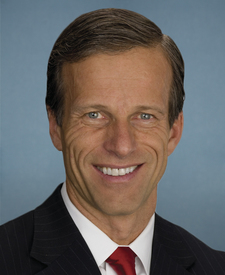
John Thune
Senator, SD • Republican
29 years in Congress (first took office 1997)
Sign in and give your stance on bills to see your alignment score with this member.
What John Thune said
- Floor speechNov 16, 2026TRIBUTE TO SHERIFF MIKE MILSTEAD
Mr. President, today I have the privilege of recognizing Sheriff Mike Milstead, who will soon retire from his position as Minnehaha County Sheriff in South Dakota. Mike's outstanding leadership and unwavering dedication to protecting his community have strengthened public safety and made a lasting impact across Minnehaha County. Mike was born and raised in our great State of South Dakota. The son of highway patrolman Jim Milstead, Mike grew up in a law enforcement family. He and his wife Rhonda have two children and make their home in Sioux Falls, SD. Mike has spent his life serving South Dakotans, starting his public service career very young. He joined the Sioux Falls Police Explorer Program as a ninth grader in 1969, and he began his career with the Sioux Falls Police Department in 1973. After 24 years of service, he was elected as Minnehaha County sheriff in 1997. Voters have reelected him six times without opposition, allowing him to serve in this role for nearly 30 years. As Minnehaha County sheriff, Mike has led an operation that serves seven South Dakota cities, the South Dakota Air National Guard Base, and the Minnehaha County Jail. The sheriff's department employs over 240 staff members and provides full-service patrol, investigations, warrant, and civil divisions. While in office, Mike established a Chaplaincy Program, School Resource Officer Program, and South Dakota Salutes--a nonprofit supporting first responders, Active-Duty military personnel, and veterans. Mike has served on the executive board of the Midwest High Intensity Drug Trafficking Area since 2003 and is the longest serving member in the organization's history. While working on the executive board, he has also served as vice chair, chair of the fiscal planning committee, and chair of the executive board. Additionally, Mike served on the National Sheriff Association's Drug Enforcement and Homeland Security/ Global Policing Affairs committees and is active with the U.S. Attorney's Anti-Terrorism Task Force and the FBI's Joint Terrorism Task Force. Through his many responsibilities, Mike has focused on building strong relationships between the sheriff's department and the communities it serves. His distinguished law enforcement career clearly shows his commitment to public service and his dedication to serving and protecting his neighbors. As Mike embarks on a well-earned retirement, I want to extend my heartfelt gratitude for his leadership and commitment to South Dakota. While he may be stepping away from the daily demands of the sheriff's office, the programs he established, partnerships he strengthened, and lives he touched will leave a legacy throughout Minnehaha County and South Dakota. I pray that God blesses Mike, Rhonda, and their family in the days ahead.
Source → - Floor speechNov 16, 2026Nominations (Executive Session)
Madam President, on Thursday, the Senate confirmed Gregory Cook to be U.S. district court judge for the Northern District of Alabama. Judge Cook is the 57th Federal judge confirmed during this Congress, and later today, we will confirm our 58th. There will be more to come. Thanks to the diligent work of Chairman Grassley and the Judiciary Committee, we have a number of additional judges to confirm before the year is out, and we have already locked in floor votes for every available judicial nominee. In fact, if you look at this chart and the number that have been confirmed, the noms that are teed up, which we will process here shortly, there are zero remaining on the calendar. In other words, they have been recommended by the administration and gone through the process of the Senate Judiciary Committee, where they have been reported out to the floor for consideration. So 57 confirmed already and 6 that are teed up that we will be confirming here shortly. Then, hopefully, we will have more that we will be able to put on the calendar soon as the administration makes recommendations and the Judiciary Committee is able to process those. So we have locked votes in for every available judicial nominee. Every available judicial nominee has been locked in right now on the floor to be voted on. We will also confirm more than 100 additional Presidential nominees before the end of the year. Once again, our committees have done excellent work processing these nominations. Since this majority took over last January, we have confirmed over 606 civilian--I should say we have confirmed 606 civilian nominees. That includes getting the President's Cabinet in place at the fastest pace in over 20 years, in half the time--half the time--it took to fill the Obama and first Trump administration Cabinets. We have consistently cleared the calendar of available nominees throughout our majority. As I said, we will confirm our 58th judicial nominee today. I will note that when it comes to judges, we are turning nominations into confirmations at the fastest pace since the Reagan administration. When this majority took over nearly 2 years ago, building this kind of record on nominations didn't look very likely. It was clear from the outset the Democrats were intent on a historic level of obstruction. They dragged out the process for virtually every nominee to come before this body. It took a year and a half before Democrats finally let a few nominees go by voice vote--something no other President has had to deal with. In fact, if you look at recent history, Presidents have had the vast majority of their nominees approved by voice vote or unanimous consent because historically, this institution has cooperated to try to make sure the administration has their people in place. If you look throughout history, 98 percent for Presidents George H. W. Bush and Clinton--98 percent of the nominations they made for positions in the executive branch of our government were confirmed either by voice vote or unanimous consent here on the floor of the Senate--98 percent; 90 percent for Presidents George W. Bush and Barack Obama. Well, then came President Trump's first administration, when Democrats introduced an unprecedented level of partisanship to the confirmation process, forcing time-consuming votes on nominees who would normally have gone by unanimous consent or voice. But even with this new level of partisanship, President Trump, in his first term, and President Biden each had more than half of their nominees approved by unanimous consent or voice vote here in the U.S. Senate. Well, then President Trump started his second term, and Democrats took it up a notch--quite a few notches, actually. As I said, until earlier this year, Democrats had not allowed a single--single--nominee to be confirmed by voice or unanimous consent. They also dragged out the process of nominees who went on to get bipartisan support in their confirmation vote, sometimes by large margins here on the floor. So, let's not mistake Democrats' obstruction for some sort of principled stand. This was partisan politics. The Republicans were determined to overcome Democrats' obstruction and ensure that the President got his nominees in place. That included taking action to restore the Senate's practice of confirming noncontroversial nominees in batches, the way things have traditionally been done around here. That has allowed us to clear the nominations calendar on several occasions. Most of all, we have just done a lot of work. To begin with, we had the longest continuous session in 15 years which allowed us to confirm the Cabinet, as I said earlier, at a historically quick pace. And when we turned to lower-level nominees, we continued to put in the work in committees and on the floor. We showed up for the votes, lots and lots of votes. In fact, last year, 2025, the first year, as a lot of these nominees were coming to the Senate for consideration, we cast more votes in 2025 than any Senate in history with one exception going back 80 years. Lots and lots of votes. And we did the same when it came to confirming judges to the Federal bench. The results speak for themselves. We are going to continue our aggressive pace for the remainder of this year because when Democrats take control of the Senate next year, our job is going to get a lot harder. But there is time left on the clock for this Republican majority, and we intend to use it. I yield the floor. Madam President, I suggest the absence of a quorum.
Source → - Floor speechNov 16, 2026Congressional Budget Office Annual Budget Review (Executive Session)
Madam President, I ask unanimous consent that the order for the quorum call be rescinded.
Source → - Floor speechNov 12, 2026Bipartisan American Affordability and Jobs Act (Executive Session)
Mr. President, in January of 2026, part of the key sewer lines for the customers in the Washington, DC, area collapsed. The resulting sewage spill was, the Washington Post reported, ``one of the largest spills of untreated wastewater in U.S. history. Enough raw sewage to fill 364 Olympic-sized swimming pools flushed into the Potomac River north of the nation's capital, exacting an ecological toll that scientists are still trying to calculate.'' Why do I bring this up? Well, I will tell you, because DC Water had first identified weaknesses in the pipe and proposed repairs a full 7 years earlier--7 years earlier--but had been prevented from starting that by a Federal permitting process that dragged on and on and on until the pipe suffered a catastrophic failure. It is an excellent illustration of the need for permitting reform in this country. Too often everything from critical repairs to important new energy projects get bogged down in Federal bureaucracy and are delayed for not months but years at a time. And the Washington, DC, sewage spill is an outstanding example of the potential consequences. Now, it is important to ensure that serious environmental concerns are addressed before projects are undertaken, and it is essential to ensure that the concerns of local stakeholders, in particular local landowners, are listened to and that they have a voice in the approval process. But the Federal permitting process has gone way beyond that to include years of senseless delays, often caused by endless litigation from environmental groups or from Agencies that are set on studying a project literally to death. We have seen those delays happen on projects with everything from drinking water and irrigation to building affordable energy sources and better roads and bridges. And like in the case of the DC sewage spill, these delays can even apply to projects where we are simply replacing something that has been there for many years. These delays all add costs, and those costs are ultimately paid by families through things like higher energy costs, higher gas and diesel prices, and higher taxes. The legislation that we are considering today would address that. The Bipartisan American Affordability and Jobs Act will streamline and reform the permitting process to ensure that projects are approved or rejected in a timely fashion. This is particularly good news on the energy front. Needless to say, Americans have been dealing with an elevated cost of living since the early days of the Biden administration, and when it comes to affordability, energy prices affect pretty much everything. We all know that. High energy costs don't just mean higher gas and electric bills, they mean higher costs for almost everything. And one of the best ways to keep prices of all kinds down is to expand domestic energy production, everything from oil and gas to solar and wind to hydropower. Too often, however, as I said, new energy projects get bogged down in Federal Government bureaucracy and end up in limbo for years. Streamlining bureaucracy, by contrast, like the Bipartisan American Affordability and Jobs Act will do, will speed up key projects and bring more jobs and more affordable prices along with it. We have talked about what this bill would do for energy projects, but there is another kind of project on a lot of Americans' minds right now, and that is data center construction. Communities in my State of South Dakota and around our country are concerned about the movement of data centers into their communities, in particular, about what their construction could mean for energy prices. And I am pleased to report that the Bipartisan American Affordability and Jobs Act would enact new protections for local communities. For starters, it would require that the data centers shoulder the energy costs associated with their operation and construction, whether that is day-to-day running costs or the cost of additional infrastructure. But the legislation doesn't stop there. It also provides technical assistance to communities to help them understand and explore the impact a proposed data center would have on their locality--everything from the economic impact to the energy costs and infrastructure requirements that would be associated with the project. There are a number of other good elements in this bill. I am always particularly invested in what legislation can do to help farmers and ranchers, which is the livelihood of our economy in South Dakota. And I am very pleased that this bill will extend Clean Water Act permits for farmers from 5 to 10 years, significantly reducing the frequency with which farmers have to engage with government bureaucracy with that process. This legislation will also provide for faster grazing-related reviews which will make a real difference to ranchers. If there is one thing Americans across our country said in the election last week, it is that they are hurting economically. This bill is one important way that we can help. Reforming the permitting process will help advance the kind of projects that will create new jobs, grow our economy, and increase wages, and more American energy development means a more reliable and affordable energy supply for American families. I want to thank Chairmen Shelley Moore Capito--and by chairmen, I should say Shelley Moore Capito and Mike Lee for their tremendous work on this legislation. This is a bipartisan bill, and President Trump strongly endorsed this legislation on Truth Social earlier this week. I look forward to swift Senate passage, and I hope the House will follow suit and get this legislation to the President's desk in the very near future. I yield the floor. I suggest the absence of a quorum.
Source → - Floor speechNov 12, 2026End-of-Year Priorities (Executive Session)
Mr. President, I ask unanimous consent that the order for the quorum call be rescinded.
Source → - Floor speechNov 11, 2026Cloture Motion (Executive Session)
Mr. President, I send a cloture motion to the desk. The cloture motion having been presented under rule XXII, the Chair directs the clerk to read the motion.
Source → - Floor speechNov 11, 2026EXECUTIVE CALENDAR (Executive Session)
Mr. President, I move to proceed to executive session to consider Calendar No. 967. The question is on agreeing to the motion.
Source → - Floor speechNov 11, 2026LEGISLATIVE SESSION
Mr. President, I move to proceed to legislative session.
Source → - Floor speechNov 11, 2026Cloture Motion (Executive Session)
Mr. President, I send a cloture motion to the desk.
Source → - Floor speechNov 11, 2026EXECUTIVE CALENDAR (Executive Session)
Mr. President, I move to proceed to executive session to consider Calendar No. 970.
Source → - Floor speechNov 11, 2026LEGISLATIVE SESSION
Mr. President, I move to proceed to legislative session.
Source → - Floor speechNov 11, 2026Cloture Motion (Executive Session)
Mr. President, I send a cloture motion to the desk.
Source → - Floor speechNov 11, 2026EXECUTION CALENDAR (Executive Session)
Mr. President, I move to proceed to executive session to consider Calendar No. 969.
Source → - Floor speechNov 11, 2026LEGISLATIVE SESSION
Mr. President, I move to proceed to legislative session.
Source → - Floor speechNov 11, 2026Cloture Motion (Executive Session)
Mr. President, I send a cloture motion to the desk.
Source → - Floor speechNov 11, 2026EXECUTIVE CALENDAR (Executive Session)
Mr. President, I move to proceed to executive session to consider Calendar No. 968.
Source → - LEGISLATIVE SESSION
Mr. President, I send a cloture motion to the desk for substitute amendment No. 6883.
Source → - LEGISLATIVE SESSION
Mr. President, I ask unanimous consent that the order for the quorum call be rescinded.
Source → - LEGISLATIVE SESSION
Mr. President, yesterday the Republican conference held its first meeting with our new Members for the 120th Congress, and we had a robust discussion about our conference's future and how we can best serve the American people for the next 2 years. We also held our leadership elections for the coming Congress. I am grateful to my colleagues for again placing their trust in me to be the Republican leader. And I am looking forward to working with the other Members of our leadership team and with all of our colleagues, both old and new, over the next 2 years. In my first speech from this desk nearly 2 years ago, one of the things I talked about was restoring the Senate as a place of discussion and deliberation. And over these last 2 years, I have striven for that ideal, and I am proud of the legislative record that we have built. The Working Families Tax Cuts, which delivered permanent tax relief to hard-working Americans, the 21st Century ROAD to Housing Act, a bipartisan effort to make home ownership more affordable. Republicans and Democrats came together to craft the first Federal legislation dealing with digital assets. We passed the Laken Riley Act, the Protect College Sports Act, and we demonstrated what is possible when both parties come together for a more open appropriations process. On nominations, we faced historic obstruction from Democrats, and despite that, we got President Trump's Cabinet in place at the fastest pace in over two decades. We have confirmed 605 civilian nominees and put 56 article III judges on the Federal bench, and at the fastest pace since the Reagan administration. And we are not done. We could not have confirmed all of these individuals or crafted and passed these bills without the hard work of our Republican conference. And I want to thank them for all they have done in this Congress, and I have no doubt that we will continue to work just as hard through the end of this year and into the 120th Congress as well. In that first speech I gave as leader last January, I talked about my leadership style, specifically some of the lessons I learned from playing sports. In sports you need to learn from your losses and then move on to the next game. As I said, part of our meeting yesterday was a conversation about Republicans' future. I expect those conversations to continue, and for all Republican Senators to play a role in building up our party. We will see where we need to improve, identify our strengths, and use them to best serve the American people. Whether we are in the majority or the minority, we work for the American people. Last week, voters sent a clear message, and a large part of that message has to do with the cost of living. Hard-working people have faced cost of living challenges for more than 5 years now since the early days of the Biden administration. And while I am proud of accomplishments like the Working Families Tax Cuts, there is more to do. In the coming months and years, we will see legislation like the Working Families Tax Cuts and the ROAD to Housing Act continue to bear fruit, and affordability will continue to be at the top of our priority list here in the Senate and not just next year--right now. This week, the Senate has advanced bipartisan permitting reform legislation. A more efficient permitting system would reduce costly delays, get things built faster, and provide more affordable and accessible energy across the country. It would also encourage investment in America, create jobs, and boost made-in-America manufacturing. The need is real and the opportunity is ripe for us to get this done. We have a bipartisan agreement that has support from the President. We should waste no time delivering this win for the American people. And the sooner we finish permitting, the more time we will have for additional priorities. As I said, we will also be confirming more of the President's nominees before the end of the year, and I expect that we will continue to face obstruction from Democrats in our efforts. But we are going to put in the work to overcome that obstruction to get qualified individuals in place. Over the last 22 months we have been busy. And I hope everyone is ready to run through the tape because there is more work to be done in the 119th Congress, and we are going to leave it all on the field. Mr. President, before I close, I want to say a few words about Veterans Day. Last month I had the opportunity to attend two deployment ceremonies back home in South Dakota. In this 250th year of our country's independence, these ceremonies held a special significance. Celebrating 250 years of American independence would be incomplete without acknowledging that this Nation endures because Americans have answered and continue to answer the call to serve. For many Americans, serving our country is a family tradition they trace back through generations. Others are the first in their family to put on the uniform. All--all--are ready to give their lives and their future for this country's future. I am grateful to all of the Americans who have served our country in uniform. To Chairman Moran and members of the Veterans Affairs Committee, thank you for all of your work this Congress to help improve the lives of all of America's veterans. And I want to wish all of those who have served a happy Veterans Day. I yield the floor. I suggest the absence of a quorum.
Source → - LEGISLATIVE SESSION
Mr. President, I send a cloture motion to the desk on H.R. 2347.
Source → - Floor speechNov 10, 2026EXECUTIVE CALENDAR (Executive Session)
Madam President, I move to proceed to executive session to consider Calendar No. 945.
Source → - Floor speechNov 10, 2026Cloture Motion (Executive Session)
Madam President, I send a cloture motion to the desk.
Source → - Floor speechNov 10, 2026EXECUTIVE CALENDAR (Executive Session)
Madam President, I move to proceed to executive session to consider Calendar No. 944.
Source → - Floor speechNov 10, 2026LEGISLATIVE SESSION
Madam President, I move to proceed to legislative session.
Source → - Floor speechNov 10, 2026Cloture Motion (Executive Session)
Madam President, I send a cloture motion to the desk.
Source → - Floor speechNov 10, 2026EXECUTIVE CALENDAR (Executive Session)
Madam President, I move to proceed to executive session to consider Calendar No. 901.
Source → - Floor speechNov 10, 2026LEGISLATIVE SESSION
Madam President, I move to proceed to legislative session.
Source → - Floor speechNov 10, 2026Cloture Motion (Executive Session)
Madam President, I send a cloture motion to the desk.
Source → - SURVIVOR JUSTICE TAX PREVENTION ACT
Madam President, I have an amendment at the desk to substitute amendment No. 6883.
Source → - SURVIVOR JUSTICE TAX PREVENTION ACT
Madam President, I ask for the yeas and nays on the amendment.
Source → - SURVIVOR JUSTICE TAX PREVENTION ACT
Madam President, I ask that the reading be dispensed with.
Source → - SURVIVOR JUSTICE TAX PREVENTION ACT
I ask consent that the reading be waived.
Source → - SURVIVOR JUSTICE TAX PREVENTION ACT
Madam President, I have a second-degree amendment to the instructions at the desk.
Source → - SURVIVOR JUSTICE TAX PREVENTION ACT
I ask for the yeas and nays on my amendment.
Source → - SURVIVOR JUSTICE TAX PREVENTION ACT
I ask consent that the reading be waived.
Source → - SURVIVOR JUSTICE TAX PREVENTION ACT
Madam President, I have an amendment to the instructions.
Source → - SURVIVOR JUSTICE TAX PREVENTION ACT
Madam President, I ask for the yeas and nays on the motion to commit with instructions.
Source → - SURVIVOR JUSTICE TAX PREVENTION ACT
I ask that the reading be dispensed with.
Source → - SURVIVOR JUSTICE TAX PREVENTION ACT
Madam President, I call up substitute amendment No. 6883.
Source → - SURVIVOR JUSTICE TAX PREVENTION ACT
Madam President, I move to commit the bill to the Committee on Finance with instructions.
Source → - SURVIVOR JUSTICE TAX PREVENTION ACT
I ask the reading be dispensed with.
Source → - SURVIVOR JUSTICE TAX PREVENTION ACT
Madam President, I have a second-degree amendment at the desk.
Source → - SURVIVOR JUSTICE TAX PREVENTION ACT
I ask for the yeas and nays on the amendment.
Source → - SURVIVOR JUSTICE TAX PREVENTION ACT
I ask that the reading be dispensed with.
Source → - SURVIVOR JUSTICE TAX PREVENTION ACT
Madam President, I have an amendment to the underlying bill at the desk.
Source → - SURVIVOR JUSTICE TAX PREVENTION ACT
I ask that the reading be dispensed with.
Source → - SURVIVOR JUSTICE TAX PREVENTION ACT
Madam President, I have a second-degree amendment at the desk.
Source → - SURVIVOR JUSTICE TAX PREVENTION ACT
I ask for the yeas and nays on the amendment.
Source → - SURVIVOR JUSTICE TAX PREVENTION ACT
I ask the reading be dispensed with.
Source → - Floor speechNov 9, 2026LEGISLATIVE SESSION
Madam President, there is no doubt about it, Tuesday night was a tough election night. It was certainly not the outcome that we had hoped for, but it was the outcome the American people chose, and we have to listen to them. I am proud of what Republicans have been able to accomplish for the American people in the 119th Congress--most especially, the Working Families Tax Cuts, which allows hard-working Americans to keep more of their hard-earned money. But the American people let us know that they need more. Inflation is still too high, and just going to the grocery store can take a huge chunk out of a family's budget. And steep gas prices have only increased that burden. And so I think the election gave us two things: one, an opportunity to reflect on what we as a party need to do better; and, two, a clear message that this coming Congress needs to double down on the work that we have been doing on affordability. As I said, I am proud that this Republican Congress has put more money in Americans' pockets with the Working Families Tax Cuts, and I am proud, too, of other measures we passed, like the 21st Century ROAD to Housing Act, which will help address the cost of housing by increasing supply. But as the American people have emphasized, there is more work to be done. A very good start would be the bipartisan permitting reform legislation that we will vote on this evening, legislation that Republicans wanted to bring up earlier this fall. Energy prices affect pretty much everything when it comes to affordability. High energy costs don't just mean higher gas and electric bills. They mean higher costs for a wide variety of goods and services, from hot dogs to home repairs. And so one of the biggest things that we can do to address affordability for the long term is to ensure a reliable and affordable energy supply, and that starts with ensuring that energy projects don't face unnecessary permitting barriers. Regrettably, my Democrat colleagues delayed consideration of permitting reform legislation before the election. But I am hopeful that, later today, they will allow us to proceed to the bill and, hopefully, finish it this week. Republicans are paying attention. The American people are paying attention. Tonight is the first opportunity for Democrats to show whether they are serious about addressing costs or whether their rhetoric on affordability was just that. I want to offer my congratulations to all those who won on Tuesday, and I want to especially welcome our new Republican Senators and our new Democrat Senators as well. And I want to say to my Democrat colleagues, new and old, that Republicans are ready to work with you to address the American people's concerns. As I suggested, we can notch our first bipartisan win for the American people before the new Congress even starts by passing permitting reform in the coming days. But I do want to say one thing: Republicans are ready and willing to work with our Democrat colleagues, but that does not mean rubberstamping a leftist agenda. It does not mean standing by while Democrats attempt to dismantle the tax relief that we passed for the American people. It does not mean standing by while Democrats attempt to reinstate the chaos that existed at the border under the Biden administration. I hope my Democrat colleagues realize what this election was and what it was not. This election was a sign of Americans' frustration with the high cost of living that they have been dealing with literally since the opening days of the Biden administration. It was not--it was not--a mandate for radical policy and socialist fantasies. And so while Republicans are prepared to work in a bipartisan way, we will also emphatically oppose Democrats when required to protect hard-working Americans and our system of government. We will oppose any attempt to balloon the size of the government or tear down American institutions, as the Democratic Socialists would like to do. In fact, growing the size of the government is the last thing we should be doing if we want to make life more affordable for hard-working Americans, and I hope my Democrat colleagues realize this. The American people are not looking for socialist government and leftist fantasies. They are looking for lower gas prices. They want their grocery bills to stop growing. They want to be able to afford to buy a house for their growing family. If Democrats are committed to real work on those issues, then Republicans are ready to work with them. My Democratic colleagues have spent a lot of time talking about affordability this election cycle, but they don't exactly have a stellar record on delivering. Their signature bill in the 117th Congress, the so-called American Rescue Plan Act, helped plunge the country into an inflation crisis from which we are still trying to fully emerge. And Democrats unanimously voted against tax relief for hard-working Americans in the 119th Congress. So we will see what the 120th Congress brings. I hope it will bring a lot of bipartisan work to address the challenges facing the American people. I yield the floor. I suggest the absence of a quorum.
Source →