No donor data for Mike Thompson yet.
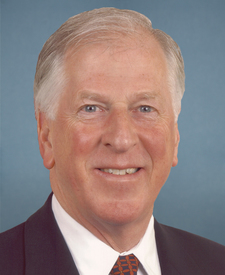
Mike Thompson
CA-4 • Democrat
27 years in Congress (first took office 1999)
Sign in and give your stance on bills to see your alignment score with this member.
What Mike Thompson said
- Extension of remarksNov 10, 2026HONORING CHARLIE TOLEDO
Mr. Speaker, I rise today to honor Charlie Toledo, in recognition of her over 40 years of expertise and advocacy in social justice. Charlie Toledo was born in 1950 in Albuquerque, New Mexico, as a twin in a family of 10 children. She attended a Catholic high school with deep philosophies which taught her how to question, research, and work hard. After college, she began fighting against the draft in Orange County. She was a lifelong learner and continued to study, work, and research throughout her life. Charlie worked as the Executive Director and founder of the Suscol Intertribal Council from 1992, located in Napa County. She went on to work on the National Water Board in San Francisco and became the Chair of the Women's Intercultural Network. She additionally worked on the Advisory Committee for the California Rural Indian Health Board (CRIHB) and assisted in the movement to reclaim tobacco as medicine. Charlie's contributions to the community include her extensive experience as a community organizer in regional, statewide, national, and international forums. Since 1982, she has worked in alternative healthcare fields, as well as background in mediation for individuals, families, and organizations. She would speak out politically for water, forest, and soil management when it was unsafe to do so as an Indigenous woman. In her over three decades of public service, Charlie created and taught an historical trauma education model to educate people about our Indigenous community. She also facilitated a community mural in remembrance of the Indigenous people of Napa. She has been an avid component of the cultural exchange with Mexico and the Tuspan people and has been an organic gardener since 1978. Charlie was a midwife before it was legal to have home births, advocating for a more humane birthing system in the State of California. Charlie Toledo leaves behind a legacy of Indigenous leadership, humanitarian advocacy, and deep cultural reconnection that continues to inspire and guide communities worldwide. Mr. Speaker, Charlie Toledo has dedicated her life to protecting the Indigenous people and underrepresented communities in California and the United States of America. She has transformed the lives of those around her through her service and mentorship to others. Therefore, it is fitting and proper that we honor her here today.
Source → - Extension of remarksNov 10, 2026HONORING DR. LEE MERRIAM TALBOT
Mr. Speaker, I rise today to honor Dr. Lee Merriam Talbot, a world renowned environmentalist who dedicated his life and career to conservation. Dr. Talbot was born in 1930 in New Bedford, Massachusetts. Dr. Talbot holds an Associate of Arts degree, a Bachelor of Arts in liberal arts and wildlife ecology, a Master of Science in vertebrate ecology, and a Ph.D. in geography and ecology, all from the University of California, Berkeley. Dr. Talbot was one of the most influential wildlife conservation scientists and environmental policy architects of the 20th century. Dr. Talbot helped advance the scientific idea that ecosystems must be protected as whole systems, not simply individual species. This later became central to the study of modern conservation biology. He was the primary architect and author of numerous environmentally focused objectives including the landmark Endangered Species Act (ESA), the Marine Mammal Protection Act (MMPA), the Convention on Trade of Endangered Species (CITES), and the World Heritage Convention. Dr. Talbot advised on environmental issues in over 130 countries, working closely with the World Wildlife Fund, United Nations, and the International Union for Conservation of Nature. Through these efforts, Dr. Talbot became internationally known for his major ecological fieldwork and research that resulted in the creation of the Serengeti National Park, the Masai Mara National Reserve, and many more World Heritage Sites. Dr. Talbot was the Senior Scientist and Director of International Affairs of the Council on Environmental Quality (CEQ) in the West Wing of the White House for President Nixon, President Ford, and President Carter. In this position, he placed endangered species high on the Nation's political and environmental agenda. His efforts resulted in the Endangered Species Act, one of the most important environmental pieces of legislation in United States history, getting signed into law by President Nixon on December 28, 1973. Thanks to Dr. Talbot, the ESA has helped prevent the extinction of species such as the Bald Eagle, Gray Whale, Peregrine Falcon, California Condor, American Alligator, and countless other animals. Dr. Talbot was also a beloved professor at George Mason University, where he taught environmental science, public policy, conversation biology, and international affairs for nearly 30 years. Dr. Talbot served in the United States Marine Corps during the Korean War. He was also a Resident Ecologist at the Smithsonian Institution and a championship racecar driver for seven decades. His last race took place when he was 87 years old, at Laguna Seca raceway in Monterey, California, one of the largest and most prestigious motor sports events in the world. At this race, Dr. Talbot received the prestigious Spirit of Monterey Award. Dr. Talbot's father, Murrell Williams Talbot, a noted ecologist, was closely tied to the early conservation movement in California. Dr. Talbot's wife, Martha ``Marty'' Hayne Talbot, spent much of her youth growing up in St. Helena. Dr. Talbot and his wife strongly encouraged organically farming their Napa Valley Zinfandel vineyard before this was widely practiced in the valley. Their children, Lawrence Hayne Talbot and Russell Merriam Talbot, took responsibility for farming their family vineyards in 2008. To this day, the Talbot family vineyard is one of the oldest family-held vineyard properties in Napa. Mr. Speaker, Dr. Talbot was described as a kind, funny, and humble person. Dr. Talbot's legacy of being one of the major conservation figures of the 20th century will live on in his former students, the environmental laws he guided into reality, and the wildlife and wild places he fiercely protected throughout his life. Therefore, it is fitting and proper that we honor him here today.
Source → - Extension of remarksNov 10, 2026HONORING TOM GAMBLE
Mr. Speaker, I rise today to honor Tom Gamble for being named as the Napa County Farm Bureau Agriculturist of the Year at the annual Love of the Land celebration. The Farm Bureau recognizes his exceptional contributions to Napa Valley agriculture, longstanding leadership in agricultural preservation, and commitment to environmental stewardship. Tom Gamble grew up in Napa Valley as a first-generation vigneron and third-generation member of a family whose agricultural roots in Napa County date back to 1916. His upbringing was deeply connected to the family's farming and ranching operations, where he developed an appreciation for agriculture through experiences picking walnuts, irrigating alfalfa, and working cattle on family ranchland. His father, George Gamble, was a longtime Berryessa-area cattle rancher who began ranching in the region in 1960. George received the Napa County Farm Bureau's Love of the Land recognition as Agriculturist of the Year in 2009. Tom's agricultural career began in 1981 when he purchased his first vineyard while attending the University of California, Davis. He developed extensive experience across viticulture, cattle ranching, and agricultural business management. In 1999, Tom and his brother Jim Gamble co-founded Napa Free Range Beef, one of Napa County's first grass-finished beef operations. Alongside his cousin Launce Gamble, Tom continues to co-manage family ranchland and leased vineyards. In 2005, Tom and his wife, Colette, founded their winery, now known as Gamble Estates. Today, Gamble Estates produces wines from certified organic vineyards in Oakville, Rutherford, Mount Veeder, and Yountville. The winery's approach emphasizes soil health, ecological balance, and the preservation of each vineyard site's unique characteristics. Throughout his career, Tom has demonstrated a commitment to protecting the region's agricultural resources, advancing sustainable farming practices, and ensuring the long-term viability of local agriculture. As a longtime leader within the Napa County Farm Bureau, Tom served nearly two decades on its Board of Directors, including terms as President and Vice President. He played an important role in local land-use policy, particularly through his involvement in the development of the 2008 Napa County General Plan. His environmental contributions include involvement with the Napa River Restoration Project and Fish Friendly Farming, supporting efforts to improve watershed health, restore natural habitats, and encourage environmentally responsible agricultural practices. Mr. Speaker, Tom Gamble has demonstrated the ability to integrate agricultural tradition with innovative farming practices, building businesses that reflect both his family's heritage and his vision for the future of Napa Valley agriculture. Therefore, it is fitting and proper that we honor him here today.
Source → - Extension of remarksNov 10, 2026HONORING MANUEL RIOS
Mr. Speaker, I rise today to honor Manuel Rios for being named as the Napa County Farm Bureau Member of the Year at the annual Love of the Land celebration. The Farm Bureau recognizes his outstanding contributions to Napa Valley, his leadership in our wine community, and his longstanding commitment to serving our agricultural community. Beginning at age 10, he worked alongside his father in Napa Valley vineyards, developing a deep understanding of the land and the care required to produce exceptional wine grapes. Driven by a desire to expand his knowledge, Manuel completed viticulture courses at Napa Valley College and pursued vineyard management opportunities throughout California, including Lake, Mendocino, Solano, Santa Barbara, and Sonoma counties. His professional experience eventually took him internationally to Australia and Argentina, where he managed vineyards for large corporate operations and gained valuable perspectives on viticulture and agricultural management. In 1998, Manuel returned to Napa Valley and founded Rios Farming Company, LLC. In 2005, Manuel expanded his agricultural endeavors into winemaking, establishing Rios Wine Company. Today, Rios Wine Company produces approximately 3,500 cases annually, with a winery located in the Aetna Springs area of northern Napa County. Manuel has distinguished himself as a pioneering Hispanic agricultural entrepreneur, respected vineyard management professional, and dedicated community leader. Beyond his professional accomplishments, Manuel has demonstrated an unwavering commitment to agricultural advocacy, farmworker representation, and community service. As a former President and current Board Member of the Napa County Farm Bureau, Manuel has helped protect the interests of local farmers, vineyard owners, and agricultural businesses. He is a trusted representative of the agricultural community, helping bridge communication between growers, farmworkers, and community leaders. His service as a Board Member of the Napa County Housing Commission and support for Napa's farmworker centers reflects his broader commitment to addressing housing needs and improving opportunities for those who live and work in the region. His contributions also extend to the next generation of agricultural leaders. Through ongoing donations, sponsorships, and participation in community events, Manuel supports Napa County 4-H, Future Farmers of America (FFA), and initiatives that encourage young people to pursue agricultural education and careers. Mr. Speaker, Manuel Rios has a legacy that is defined by his lasting commitment to Napa Valley's agricultural heritage, its workforce, and the future of the community he calls home. Therefore, it is fitting and proper that we honor my friend Manny Rios here today.
Source →
Sponsored
None loaded