No donor data for Nydia M. Velázquez yet.
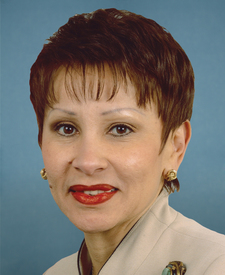
Nydia M. Velázquez
NY-7 • Democrat
33 years in Congress (first took office 1993)
Sign in and give your stance on bills to see your alignment score with this member.
What Nydia M. Velázquez said
- Floor speechNov 11, 2026504 MODERNIZATION AND SMALL MANUFACTURER ENHANCEMENT ACT OF 2026
Mr. Speaker, I yield myself the balance of my time to close. The National Association of Development Companies supports my legislation, and I appreciate their feedback to make my bill even stronger. Again, I thank Chairman Williams and his team for their work to advance this truly bipartisan bill. In the little time remaining, I hope to work together with our Senate colleagues to enact this bill into law. It has been a pleasure to work with Chairman Williams on the Small Business Committee, and I wish him the best of luck in the next Congress. I encourage all my colleagues to vote ``yes,'' and I yield back the balance of my time.
Source → - Floor speechNov 11, 2026504 MODERNIZATION AND SMALL MANUFACTURER ENHANCEMENT ACT OF 2026
Mr. Speaker, I yield myself such time as I may consume. Mr. Speaker, I rise in support of H.R. 10375, the 504 Modernization and Small Manufacturer Enhancement Act, as amended. The 504/CDC program is an SBA loan guarantee program supporting small businesses in accessing capital for the development of major fixed assets, like buildings and equipment. This financing has a significant impact on communities across the country. In 2025, the 504/CDC program is estimated to have contributed to the retention and creation of roughly 70,000 new jobs. The bill will go a long way in boosting CDCs' ability to support economic and community development activities and help small businesses retain and create jobs. First, the bill enhances the public policy goals that CDCs are tasked with fulfilling, bringing them in line with our current needs. These goals include workforce development benchmarks and prioritizing the expansion of businesses with 10 or fewer employees. Importantly, for New York, Puerto Rico, Texas, and hundreds of other communities across the country, we have created revitalizing areas impacted by natural disaster as a new CDC public policy goal. Doing so helps the 504 program direct loans to disaster resilience and reinforce the role of small businesses as the backbone of local economies during disaster recovery. Further, the bill expedites the 504 loan origination process by enabling CDCs to carry out aspects of loan closing on their own, while ensuring the SBA remains involved in the final approval. A longstanding priority of mine has been reforming the rules governing how 504 loans can be used to acquire, renovate, or reconstruct mixed-use buildings. There are thousands of mixed-use buildings across the country, from urban Brooklyn to rural Texas. These buildings have small businesses on the ground floor--a bodega, barbershop, or dry cleaner--and small apartments on the second and third floors. Revitalization of our main streets and urban corridors have stalled for decades because we have failed to classify these buildings and develop a government-supported loan program to fit their needs. By making critical changes to the leasing requirements, we can unleash the 504 program's full potential to help redevelop these buildings. Increasing the portion of a building that a small business may lease out from 49 to 66 percent allows small businesses to use a 504 loan to properly operate on the street level while leasing the top floors for residential or commercial use, increasing our commercial output and housing supply at the same time. Finally, my bill provides clarity to CDCs, lenders, and the SBA that the ``credit elsewhere'' exemption, which Congress intended only for the 7(a) program, does not apply to the 504/CDC program. The 7(a) and 504 programs are two entirely separate programs, and it is time SBA and some interested parties treat them as such. Mr. Speaker, I urge my colleagues to support my bill, and I reserve the balance of my time.
Source → - Floor speechNov 11, 2026RESHORING AMERICAN MANUFACTURING ACT OF 2026
Mr. Speaker, I reserve the balance of my time.
Source → - Floor speechNov 11, 2026RESHORING AMERICAN MANUFACTURING ACT OF 2026
Mr. Speaker, I yield myself such time as I may consume. Mr. Speaker, I lend my support to H.R. 9718, the Reshoring American Manufacturing Act, as amended. I commend Mr. Wied and Mr. Olszewski for working together to reach a bipartisan agreement. American small businesses need policies that help them grow, compete, and create good-paying jobs. To that end, I recognize the importance of a strong domestic manufacturing sector and reliable supply chains. That is why I supported the CHIPS and Science Act, the Inflation Reduction Act, and the Infrastructure Investment and Jobs Act, which provided incentives for domestic semiconductor manufacturing, tax incentives for clean energy manufacturing, and investments in domestic materials, infrastructure, and supply chains. Unfortunately, the current administration curtailed or eliminated several of these incentives, instead prioritizing tariff policies that have weakened the economy, slowed job growth, and put enormous strain on Main Street businesses. This bill will not undo the damage caused by those policies, but it can help small businesses find and connect with U.S. manufacturers, producers, and suppliers. That is a step in the right direction. I appreciate the improvements that were made to the bill, including a provision requiring SBA to conduct a study on the effectiveness of the web page, issuing a report to Congress, and another sunsetting of the requirements of the bill after 4 years. These provisions will give both the SBA and Congress an opportunity to evaluate whether this web page is delivering results and whether we are using taxpayer dollars effectively and responsibly. Mr. Speaker, I urge my colleagues to support this bill, and I reserve the balance of my time.
Source → - Floor speechNov 11, 2026RESHORING AMERICAN MANUFACTURING ACT OF 2026
Mr. Speaker, I yield myself the balance of my time for the purpose of closing. Mr. Speaker, if we want to strengthen American manufacturing and bring down costs, we need to give small businesses certainty and the resources they need to compete. I am hopeful the next Congress will do just that. Again, I appreciate the efforts of Mr. Wied and Mr. Olszewski in working together to help small businesses connect with U.S. manufacturers, producers, and suppliers. Mr. Speaker, I urge my colleagues to vote ``yes,'' and I yield back the balance of my time.
Source → - Floor speechNov 11, 2026CYBERSECURITY FOR SMALL BUSINESSES ACT OF 2026
Mr. Speaker, I yield myself the balance of my time. Mr. Speaker, H.R. 10238 will build upon the existing SBDC cyber strategy and authorize the SBA to distribute cybersecurity materials for small businesses. I thank Chairman Williams and Congressman Latimer for working with me to define the appropriate role of the SBA in this effort. It is important we seek to maximize the SBA resources and efficiency by ensuring it supplements, not duplicates, existing programs that are more suited for this work. Mr. Speaker, I yield back the balance of my time.
Source → - Floor speechNov 11, 2026CYBERSECURITY FOR SMALL BUSINESSES ACT OF 2026
Mr. Speaker, I yield myself such time as I may consume. Cybersecurity is a significant threat for many small businesses. According to the U.S. Chamber of Commerce, 99 percent of small businesses use at least one platform, but only a quarter use cybersecurity malware detection tools. This disconnect is driven by the high cost and increasing complexity of cybersecurity measures and practices, especially with the advent of AI. These burdens are particularly pronounced for small government contractors who need to comply with government-unique cybersecurity and supply chain risk management requirements to enter or remain in the Federal market. The latest version of new cybersecurity regulation, known as the Cybersecurity Maturity Model Certification, sets a standard designed to ensure contractors have adequate security in place to safeguard controlled information. Implementation of this standard has been far from smooth, and the cost to the industrial base and small contractor is staggering. H.R. 10238 is designed to bolster access to resources like assessment tools, counseling help, and education for small government contractors. Mr. Speaker, I urge my colleagues to support the bill, and I reserve the balance of my time.
Source → - Floor speechNov 11, 2026SBIC REPORTING MODERNIZATION ACT OF 2026
Mr. Speaker, I have no further speakers, and I am prepared to close.
Source → - Floor speechNov 11, 2026SBIC REPORTING MODERNIZATION ACT OF 2026
Mr. Speaker, I yield myself such time as I may consume. Mr. Speaker, I rise in support of H.R. 10353, the SBIC Reporting Modernization Act of 2026. The Small Business Investment Company program is administered by the SBA to help increase the flow of private capital to small businesses. SBICs combine private funds and funds borrowed with an SBA guarantee to provide capital to small businesses that have the potential to generate outsized job growth and economic impact. SBICs make a meaningful impact on Main Street. In fiscal year 2024, they provided approximately $7.2 billion in capital to over 1,000 businesses. Timely information from the SBA is key to ensuring the effective operation of the SBIC program. In order for this committee to carry out oversight, we need the latest data. In fact, the SBA is required by statute to provide a full and detailed description of the SBIC program in its annual report to Congress. Historically, quarterly updates on the program have been published by the SBA. Unfortunately, despite my urging, the SBA has not issued a complete report since fiscal year 2024. This bill will require the SBA to publish quarterly reports. This report will provide important information, including data on SBIC licenses, the debentures issued under the program, and the jobs created and sustained through SBIC investment in small businesses. Requiring this report will ensure Congress has the latest data to monitor and address challenges in the SBIC program as they arise. Mr. Speaker, I applaud Representatives Finstad and Morrison for working together on this legislation. I ask all my colleagues to support it, and I reserve the balance of my time.
Source → - Floor speechNov 11, 2026SBIC REPORTING MODERNIZATION ACT OF 2026
Mr. Speaker, I yield myself such time as I may consume. Mr. Speaker, the committee's ability to obtain the most up-to-date information is critical to effective oversight. We need timely and accurate data to understand how the program is performing and ensure it is delivering results. This bill is supported by the Small Business Investor Alliance. Mr. Speaker, again, I thank Representatives Finstad and Morrison for their bipartisan work on this bill. I encourage all my colleagues to support the legislation, and I yield back the balance of my time.
Source → - Floor speechNov 11, 2026ENSURING SBA IMPLEMENTATION OF GAO RECOMMENDATIONS ACT OF 2026
Mr. Speaker, I yield myself the balance of my time. I am pleased to support H.R. 10371, the Ensuring SBA Implementation of GAO Recommendations Act of 2026. I commend Mrs. McIver for her initiative requiring SBA to close out a priority GAO recommendation, and I am pleased to join her as an original cosponsor. The Veterans Entrepreneurship and Small Business Development Act of 1999 requires the SBA to submit an annual report to the House and Senate Small Business and the Veterans' Affairs Committees on the needs of veteran-owned and service-disabled-veteran-owned businesses and offer ways to improve access to them. The GAO found that the SBA's existing reporting did not include the requisite information, and it issued a priority recommendation that SBA establish procedures to comply with the requirement. This is a straightforward recommendation for SBA to close out, and doing so will deliver an important benefit to veterans. Before SBA cuts staff and moves offices around, it should make sure it is getting the basics right. As we celebrate Veterans Day, it is even more imperative that SBA close out this recommendation in order to make a meaningful difference for programs that benefit veterans. Mr. Speaker, I am pleased to support this bipartisan bill, and I yield back the balance of my time.
Source → - Floor speechNov 11, 2026ENSURING SBA IMPLEMENTATION OF GAO RECOMMENDATIONS ACT OF 2026
Mr. Speaker, I yield such time as she may consume to the gentlewoman from New Jersey (Mrs. McIver).
Source → - Floor speechNov 11, 2026DISASTER LOAN OUTREACH CONSISTENCY ACT
Mr. Speaker, I yield such time as she may consume to the gentlewoman from New Jersey (Ms. Mejia.)
Source → - Floor speechNov 11, 2026DISASTER LOAN OUTREACH CONSISTENCY ACT
Mr. Speaker, I yield myself the balance of my time. Mr. Speaker, I rise today in support of H.R. 10355, the Disaster Loan Outreach Consistency Act. When disaster strikes--and it is striking more frequently than ever before--it is crucial that victims have access to high-quality, up-to-date information about the resources available to them. As these programs evolve, the information and outreach related to those programs must be updated to reflect the realities of the world we live in. The SBA's disaster loan program, which provides long-term, low-interest loans to individuals, homeowners, and businesses in the wake of a catastrophe, has seen several rule changes. For instance, in 2023, SBA updated the program to reflect cost-of-living increases. The following year, FEMA updated their programs to remove the requirement that people apply for the disaster loan program as a precondition for some types of assistance. These may sound minor, but they make a material difference for disaster victims. Unfortunately, the GAO found that not all victims were provided with full information about the rule changes. Specifically, some press releases contained different information depending on which part of the country you lived. As a result, people in the Eastern U.S. often had more information about increased loan limits or the FEMA application process than people in the Western half of the United States. The Disaster Loan Outreach Consistency Act simply codifies GAO recommendations that SBA establish a process to ensure all disseminated information related to the disaster loan program is current and consistent no matter where you live. I thank Representative Mejia and Delegate King-Hinds for their bipartisan work in bringing this commonsense legislation forward. Mr. Speaker, I urge my colleagues to vote ``yes,'' and I yield back the balance of my time.
Source → - Floor speechNov 11, 2026COMBATING FOREIGN THREATS TO MAIN STREET ACT OF 2026
I yield such time as he may consume to the gentleman from California (Mr. Tran.)
Source → - Floor speechNov 11, 2026COMBATING FOREIGN THREATS TO MAIN STREET ACT OF 2026
Mr. Speaker, I yield myself such time as I may consume. Mr. Speaker, as we bring this Congress to a close, I would like to express my sincere gratitude to my colleagues for their support and confidence in my leadership of the Small Business Committee both as the chair and ranking member. It has been an honor to serve alongside them. Throughout my tenure I have worked in a bipartisan manner to advance critical measures to help small businesses weather challenges from the pandemic and disasters to expanding lending and Federal contracting opportunities. My goal has always been to put the needs of small employers and entrepreneurs first. I have enjoyed working with each of my counterparts through my years on the Committee, most recently Chairman Williams. While we have not always seen eye to eye on every issue, we have been able to set our differences aside and pass bills that will benefit small businesses. Most of our Nation's adversaries, like Russia, are pariah states shunned by the world for their military aggression and dictatorships. Their state-run firms often employ heinous, unfair practices, like espionage, counterfeiting, and nonmarket investment. A number of U.S. small businesses have fallen prey to these tactics. Some have been ensnared in predatory arrangements, had intellectual property stolen, and unknowingly broken the law. H.R. 10329 is a bona fide attempt to address these issues. It will mandate the creation of an educational resource for small businesses on foreign adversary conduct harming them, and how to avoid and respond to such conduct. Let me be clear. This bill is not meant to target essential business partners of mainstream firms based on ethnicity or national origin. In this vein, let me commend Mr. Tran's leadership and strength on protecting both small businesses and Asian Americans in his district and nationwide. I support sending this measure to the Senate so it gets the consideration and scrutiny that it deserves. Mr. Speaker, I urge my colleagues to support the bill, and I reserve the balance of my time.
Source → - Floor speechNov 11, 2026COMBATING FOREIGN THREATS TO MAIN STREET ACT OF 2026
Mr. Speaker, I yield myself the balance of my time to close. The goal of H.R. 10329 is, laudably, to promote a whole-of-government response to behavior that is truly problematic for firms and national security. However, I would be remiss if I did not add that the SBA is merely one entity in a sea of agencies and departments, some of which are already tasked explicitly with combating these tactics. The behavior we seek to address here is carried out by nonstate actors as well as in countries not on our foreign adversaries list. For us to be fully confident we are promoting a whole-of-government response, further action is needed to ensure small firms are protected from IT theft, counterfeiting, and forced labor in all countries, not just the ones the administration dislikes. Mr. Speaker, I yield back the balance of my time.
Source →
Sponsored
None loaded