No donor data for Bruce Westerman yet.
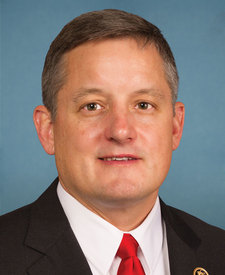
Bruce Westerman
AR-4 • Republican
11 years in Congress (first took office 2015)
Sign in and give your stance on bills to see your alignment score with this member.
What Bruce Westerman said
- Floor speechNov 17, 2026SOUTH DAKOTA WATER FEASIBILITY STUDIES ACT
Mr. Speaker, I yield myself the balance of my time. Mr. Speaker, H.R. 9785 facilitates the evaluation of three regional water supply projects that could help communities across the region meet their long-term water needs. By directing the Bureau of Reclamation to conduct feasibility studies, this legislation will help determine the costs, benefits, and potential of these projects. Mr. Speaker, I thank Congressman Johnson for his leadership on this issue. I urge my colleagues to support H.R. 9785, and I yield back the balance of my time.
Source → - Floor speechNov 17, 2026SOUTH DAKOTA WATER FEASIBILITY STUDIES ACT
Mr. Speaker, I yield myself such time as I may consume. Mr. Speaker, I rise in support of H.R. 9785, the South Dakota Water Feasibility Studies Act, introduced by Congressman Dusty Johnson of South Dakota. Reliable access to water is essential for growing communities, supporting local economies, and ensuring a sustainable water supply. H.R. 9785 directs the Bureau of Reclamation to conduct feasibility studies for three proposed projects: the Western South Dakota Water Supply Project, the Lewis and Clark Regional Water System Expansion, and the Dakota Mainstem Water Supply Project. These studies will evaluate the potential costs and benefits of each project and help determine how best to meet regional water demands. The bill also provides for a Federal cost share of no more than 50 percent for each study. These feasibility studies represent an important step toward evaluating long-term water supply solutions and helping communities plan for future needs. Mr. Speaker, I commend Congressman Johnson for his work on this legislation. I urge my colleagues to support H.R. 9785, and I reserve the balance of my time.
Source → - Floor speechNov 17, 2026SOUTH DAKOTA WATER FEASIBILITY STUDIES ACT
Mr. Speaker, I ask unanimous consent that all Members may have 5 legislative days to revise and extend their remarks and to include extraneous material on H.R. 9785, the bill now under consideration.
Source → - Floor speechNov 17, 2026SOUTH DAKOTA WATER FEASIBILITY STUDIES ACT
Mr. Speaker, I move to suspend the rules and pass the bill (H.R. 9785) to direct the Secretary of the Interior to conduct studies to determine the feasibility of constructing projects to supply municipal, rural, and industrial water in certain parts of the Missouri River basin, and for other purposes, as amended.
Source → - PIT RIVER LAND TRANSFER ACT OF 2025
Mr. Speaker, I yield myself the balance of my time. Mr. Speaker, H.R. 2400 would place approximately 557 acres of U.S. Forest Service land, referred to as the Four Corners, into trust for the Pit River Tribe. The Tribe has pursued this goal through the administrative process for more than 50 years. It is time for Congress to act legislatively on the latter. Mr. Speaker, I urge passage of the bill, and I yield back the balance of my time.
Source → - PIT RIVER LAND TRANSFER ACT OF 2025
Mr. Speaker, I have no further requests for time. I am prepared to close, and I reserve the balance of my time.
Source → - PIT RIVER LAND TRANSFER ACT OF 2025
Mr. Speaker, I yield myself such time as I may consume. Mr. Speaker, H.R. 2400, the Pit River Land Transfer Act of 2026, introduced by the late Congressman LaMalfa, would place approximately 557 acres of U.S. Forest Service land, commonly known as the Four Corners, into trust for the Pit River Tribe. The Pit River Tribe, which was federally recognized in 1976, consists of 11 different California Tribal bands and resides on a 100-square-mile reservation. In the late 1960s and early 1970s, the Pit River Tribe sought to regain control of the Four Corners property near Burney, California, citing its cultural significance and ancestral ties. Despite repeated efforts, the land remains under U.S. Forest Service ownership. This legislation would return the Four Corners property to the Tribe, which wishes to build an interpretive center there. Gaming on these lands, pursuant to the Indian Gaming Regulatory Act, would be prohibited. H.R. 2400 passed the House on suspension in December 2025. The Senate then made minor technical amendments and passed it by unanimous consent in September 2026. Our beloved former colleague, Mr. LaMalfa, worked tirelessly to get this bill done for the Pit River Tribe, and its passage by the House today would send the bill to the President's desk. Mr. Speaker, I urge support for this legislation, and I reserve the balance of my time.
Source → - PIT RIVER LAND TRANSFER ACT OF 2025
Mr. Speaker, I ask unanimous consent that all Members may have 5 legislative days in which to revise and extend their remarks and to include extraneous material on H.R. 2400, the bill now under consideration.
Source → - PIT RIVER LAND TRANSFER ACT OF 2025
Mr. Speaker, I move to suspend the rules and concur in the Senate amendment to the bill (H.R. 2400) to take certain Federal land in the State of California into trust for the benefit of the Pit River Tribe.
Source → - Floor speechNov 17, 2026RENEWING THE AFRICAN AMERICAN CIVIL RIGHTS NETWORK ACT
Mr. Speaker, I yield myself the balance of my time. Mr. Speaker, the African American Civil Rights Network connects Americans with the people and places that shaped the civil rights movement. From my home State of Arkansas to right here in our Nation's Capital, the network brings the vast story of the civil rights movement together so our Nation can honor and remember that part of our history. Furthermore, as Representative Clyburn was speaking, it reminded me of the story of Daisy Gatson Bates from Arkansas. The State of Arkansas chose to tell her story and put her statue out here in Statuary Hall to remind people of the great work that she did with the Little Rock Nine and the integration of Little Rock Central High School. It is an amazing story. She was born in my district. Her mother was raped and murdered when Daisy was very young. Daisy took that heartbreak, that anger that she had, and she did something good with her life. That is to be commemorated, but there are a lot of stories that aren't told. This network allows those stories to happen. Mr. Speaker, I support this legislation, and I yield back the balance of my time.
Source → - Floor speechNov 17, 2026RENEWING THE AFRICAN AMERICAN CIVIL RIGHTS NETWORK ACT
Mr. Speaker, I yield myself such time as I may consume. Mr. Speaker, I rise in support of H.R. 9269, introduced by Representative Clyburn, which extends the African American Civil Rights Network authorization for an additional 7 years. Established in 2018 during President Trump's first administration, the African American Civil Rights Network recognizes significant people, places, and events associated with the civil rights movement. Administered by the National Park Service, the network connects historic sites and educational programs across the country to tell the story of Americans who fought to secure equal rights under the law. Today, the network consists of over 200 sites, including Little Rock Central High School National Historic Site in my home State of Arkansas, the Martin Luther King, Jr. Memorial in Washington, D.C., and the Brown v. Board of Education National Historical Park in Kansas, just to name a few. These sites offer Americans opportunities to learn about a defining chapter in our Nation's history. By extending the African American Civil Rights Network authorization for an additional 7 years, this important bipartisan bill allows the National Park Service to continue supporting educational and interpretive efforts that will help ensure future generations understand the full, complex history of civil rights in this Nation. Mr. Speaker, I support H.R. 9269, and I reserve the balance of my time.
Source → - Floor speechNov 17, 2026RENEWING THE AFRICAN AMERICAN CIVIL RIGHTS NETWORK ACT
Mr. Speaker, I ask unanimous consent that all Members may have 5 legislative days to revise and extend their remarks and include extraneous material on H.R. 9269, the bill now under consideration.
Source → - Floor speechNov 17, 2026RENEWING THE AFRICAN AMERICAN CIVIL RIGHTS NETWORK ACT
Mr. Speaker, I move to suspend the rules and pass the bill (H.R. 9269) to extend the authorization of the African American Civil Rights Network, as amended.
Source → - Floor speechNov 17, 2026EARTH MRI REAUTHORIZATION ACT OF 2026
Mr. Speaker, I yield 2 minutes to the gentleman from Virginia (Mr. Wittman), the lead sponsor of this bill.
Source → - Floor speechNov 17, 2026EARTH MRI REAUTHORIZATION ACT OF 2026
Mr. Speaker, I yield myself such time as I may consume. I rise today in support of H.R. 9640, the Earth MRI Reauthorization Act of 2026. Since its conceptualization in 2019 under the Trump administration and Congress' authorization of the program in 2021, the Earth Mapping Resources Initiative has been a critical tool for the United States Geological Survey, industry, States, and Tribal governments. Congress created this program to address growing concerns over vulnerabilities and critical mineral supply chains. If the United States wants to secure its critical mineral supply chains, it must have robust data to understand the Nation's surface and subsurface resources. The Earth MRI program has successfully achieved the goals Congress outlined in its initial authorization. The USGS has quadrupled the Nation's geophysical survey data coverage since its inception. The USGS estimates that it is on track to collect high-resolution data for more than half of the areas of the U.S. with known potential for critical mineral deposits by the end of 2026 and to complete the initial comprehensive national surface and subsurface map by the 2031 deadline. The data collected through the Earth MRI program has many practical applications beyond mineral exploration including studying water resources, identifying sand and gravel deposits for infrastructure development, locating geothermal reservoirs, mapping natural hazards, characterizing mine wastes, and identifying orphan wells. Earth MRI and its partners are investing in State geologic surveys and rebuilding a skilled geoscience workforce. Industry, State and Tribal governments, and universities have widely applauded the program for filling a critical gap in national mapping efforts, forging invaluable partnerships, and making this data publicly accessible. H.R. 9640 is an important step toward advancing American energy security goals by providing the data needed to manage our surface, subsurface, and mineral estate. Reauthorizing the Earth MRI program will ensure America can build strong domestic critical mineral supply chains and make informed decisions about the responsible development of our vast natural resources. The bipartisan legislation reauthorizes the Earth MRI program through fiscal year 2031. It builds on House Republicans' commitment to strengthen domestic energy production and protect our national and economic security while ensuring American industrial competitiveness. I thank my colleague Mr. Wittman for his leadership on this important issue, and I urge all my colleagues to join me in support of H.R. 9640. Mr. Speaker, I reserve the balance of my time.
Source → - Floor speechNov 17, 2026EARTH MRI REAUTHORIZATION ACT OF 2026
Mr. Speaker, I ask unanimous consent that all Members may have 5 legislative days to revise and extend their remarks and to add extraneous material on H.R. 9640, the bill now under consideration.
Source → - Floor speechNov 17, 2026EARTH MRI REAUTHORIZATION ACT OF 2026
Mr. Speaker, on that I demand the yeas and nays.
Source → - Floor speechNov 17, 2026EARTH MRI REAUTHORIZATION ACT OF 2026
Mr. Speaker, I urge my colleagues to support the Earth MRI Reauthorization Act of 2026. Our Nation is blessed with abundant resource potential, and H.R. 9640 ensures that we make informed decisions about these resources and be able to meet our changing needs. Mr. Speaker, I support the bill, and I yield back the balance of my time.
Source → - Floor speechNov 17, 2026EARTH MRI REAUTHORIZATION ACT OF 2026
Mr. Speaker, I also want to associate myself with the remarks of Representative Stauber commending Representative Wittman for not only this fine piece of legislation but all the great work he has done here in Congress. Mr. Speaker, I draw your attention to eight letters of support for H.R. 9640. These organizations stress the importance of Congress' role in enacting this bipartisan legislation. Quoting from one of the letters, it says: In the current age of increasing energy and mineral demand, the Earth MRI program is critical to helping our Nation responsibly secure the resources needed for economic and national security priorities while also allowing the U.S. to compete on a global scale. Mr. Speaker, I include in the Record a link to the letters: https:// naturalresources.house.gov/uploadedfiles/earth_mri_los.pdf. Mr. Speaker, I yield 1 minute to the gentleman from Colorado (Mr. Crank).
Source → - Floor speechNov 17, 2026EARTH MRI REAUTHORIZATION ACT OF 2026
Mr. Speaker, I yield 3 minutes to the gentleman from Minnesota (Mr. Stauber).
Source → - Floor speechNov 17, 2026EARTH MRI REAUTHORIZATION ACT OF 2026
Mr. Speaker, I yield an additional 1 minute to the gentleman from Virginia.
Source → - Floor speechNov 17, 2026EARTH MRI REAUTHORIZATION ACT OF 2026
Mr. Speaker, I move to suspend the rules and pass the bill (H.R. 9640) to amend the Infrastructure Investment and Jobs Act to reauthorize the Earth Mapping Resources Initiative, and for other purposes, as amended.
Source → - Floor speechNov 17, 2026CROSSETT EXPERIMENTAL FOREST ACT OF 2026
Mr. Speaker, I yield myself the balance of my time. Mr. Speaker, it is not an exaggeration to say that our country's forest economy is in a dire crisis. It is also not an exaggeration to say that the best thing that we can do for the environment is to promote healthy forests. While sawmills and paper mills are closing all across the country, our Nation's forests are going up in flames. Meanwhile, the United States is the number one importer of wood and paper products. We are the largest importer of wood and paper products in the world, while we watch our mills close and our forests go up in flames. There is no silver bullet to address this problem, but research and demonstration that supports new markets for forest products is an important first step. Learning how to manage our forests in a way that keeps them healthy and thriving and able to meet the demands for new markets that are out there is why it is so critical that we keep investing in experimental forests, why we keep investing in research and development, and why this legislation is so vital. For nearly a century, the Crossett Experimental Forest has advanced forestry research that supported local jobs, our forest products industry, and rural economies. Here is a bit of history that goes along with that. The Yale School of Forestry is the oldest school of forestry in the United States. They started a partnership many decades ago to go down to the Crossett Experimental Forest, and they actually built a classroom down there so they could do work in this area. H.R. 10136 breathes new life into this historic mission by allowing the State of Arkansas to invest the dedicated resources and staffing necessary to make this forest thrive once again. The State has the expertise, partnerships, and resources to continue the important work. I urge my colleagues to support the legislation, which implements a locally driven, commonsense solution at a critical juncture in the future of our country's forest products industry. H.R. 10136 supports rural economies, empowers Arkansans, and will help educate the next generation of foresters and scientists. Mr. Speaker, I yield back the balance of my time.
Source → - Floor speechNov 17, 2026CROSSETT EXPERIMENTAL FOREST ACT OF 2026
Mr. Speaker, I yield myself such time as I may consume. Mr. Speaker, I rise in support of H.R. 10136, the Crossett Experimental Forest Act of 2026. This is legislation I introduced to restore a once-thriving hub of forestry research and demonstration in my district to its former glory after years of Federal Government neglect. Since its establishment in 1934, the Crossett Experimental Forest has played an important role in advancing forestry research, education, and demonstration to the betterment of Arkansas and the entire Nation. Although the forest encompasses just 1,685 acres in southern Arkansas, research conducted there has helped shape forest management practices across the country, particularly for southern pine forests. Much of Crossett's success stems from decades of collaboration among the Forest Service, the State of Arkansas, and the University of Arkansas at Monticello. These partnerships made the forest a valuable resource for researchers, foresters, students, private landowners, and the forest products industry. Because of declining Forest Service staffing and resources at Crossett dating back decades, it raised concerns about the future of its research mission. Recognizing these challenges, the State of Arkansas, the University of Arkansas at Monticello, local officials, and my office worked with local Forest Service officials to identify a path forward that would allow Crossett's historic mission to flourish again and nurture future generations of foresters. Through those discussions, a clear consensus formed: Transferring ownership and management of the forest to the State of Arkansas offered the best opportunity to continue its historic research and demonstration mission. The State is prepared to dedicate resources to Crossett and to work with the University of Arkansas at Monticello to support continued forestry and silviculture research. H.R. 10136 puts this locally developed solution into action by transferring the forest to the State of Arkansas to be managed as the Crossett Experimental State Forest. The legislation requires the State to continue managing the property for forestry research, education, and demonstration. The bill also includes a reversionary provision, allowing the property to return to Federal ownership if it is no longer dedicated to those purposes. Arkansas has a long history of responsible forest management. Our forest industry plays an important role in supporting healthy ecosystems, our State's economy, and local communities. By building on existing partnerships and placing Crossett under the management of the State of Arkansas, this legislation ensures Arkansas will continue to lead the Nation in research that supports the forest products industry of today and tomorrow. It also honors the decades of research done by many well-known researchers who have studied at the forest. It would be a shame to let all this research be packed away in the files somewhere because these forest research projects are ongoing and continuing. We have had decades of success there, and we can also have many years of future success by continuing this research. Mr. Speaker, I urge my colleagues to support H.R. 10136, and I reserve the balance of my time.
Source → - Floor speechNov 17, 2026CROSSETT EXPERIMENTAL FOREST ACT OF 2026
Mr. Speaker, I ask unanimous consent that all Members may have 5 legislative days to revise and extend their remarks and to include extraneous material on H.R. 10136, the bill now under consideration.
Source → - Floor speechNov 17, 2026CROSSETT EXPERIMENTAL FOREST ACT OF 2026
Mr. Speaker, I move to suspend the rules and pass the bill (H.R. 10136) to require the Secretary of Agriculture to convey the Crossett Experimental Forest to the State of Arkansas, and for other purposes, as amended.
Source → - Floor speechNov 17, 2026COMMON SENSE 250 ACT OF 2026
Mr. Speaker, I have no further requests for time. I am prepared to close, and I reserve the balance of my time.
Source → - Floor speechNov 17, 2026COMMON SENSE 250 ACT OF 2026
Mr. Speaker, I yield myself such time as I may consume. Mr. Speaker, I rise in strong support of H.R. 9600, introduced by Representative Raskin, which approves the location of a commemorative work honoring Thomas Paine, one of America's most influential Founding Fathers, in a prominent location within our Nation's Capital. Thomas Paine is best known for his pamphlet ``Common Sense,'' which made a powerful case for breaking from British rule. Published in January 1776, his pamphlet lit the fire that sparked the American Revolution and the fight for our country's independence. As his words spread across the Colonies, momentum grew to adopt the Declaration of Independence, which was signed just 6 months after the publication of ``Common Sense.'' In 2022, Congress authorized the Thomas Paine Memorial Association to establish a privately funded commemorative work honoring Thomas Paine for his contribution to our Nation's founding. H.R. 9600 takes the next step by authorizing the memorial's placement within Area I, a prominent area in our Nation's Capital, located near The National Mall, reserved for monuments and memorials of preeminent historical and lasting significance to the United States. As we celebrate the 250th anniversary of American independence, it is fitting that we recognize the individuals whose ideas helped shape our Nation. Paine's writings on representative government, individual rights, and political liberty inspired generations of Americans and helped lay the intellectual foundation for our government. Mr. Speaker, I support H.R. 9600, and I reserve the balance of my time.
Source → - Floor speechNov 17, 2026COMMON SENSE 250 ACT OF 2026
Mr. Speaker, I ask unanimous consent that all Members have 5 legislative days to revise and extend their remarks and to include extraneous material on H.R. 9600, the bill now under consideration.
Source → - Floor speechNov 17, 2026COMMON SENSE 250 ACT OF 2026
Mr. Speaker, on that I demand the yeas and nays.
Source → - Floor speechNov 17, 2026COMMON SENSE 250 ACT OF 2026
Mr. Speaker, I yield myself the balance of my time. Mr. Speaker, if it weren't enough in itself, Thomas Paine did more than inspire the American Revolution. Through his writings, he advanced the core principles upon which our Nation was founded and which we are celebrating exactly 250 years later. He also, I believe, made a milestone on the timeline of history and the expansion of Western civilization and democracy with the publication of ``Common Sense.'' H.R. 9600 provides a fitting opportunity to recognize his contributions to our Nation's Capital as we mark 250 years of American independence. Mr. Speaker, I support this legislation, and I yield back the balance of my time.
Source → - Floor speechNov 17, 2026COMMON SENSE 250 ACT OF 2026
Mr. Speaker, I reserve the balance of my time.
Source → - Floor speechNov 17, 2026COMMON SENSE 250 ACT OF 2026
Mr. Speaker, I move to suspend the rules and pass the bill (H.R. 9600) to approve the location of a commemorative work for Thomas Paine, America's indispensable and unsung Founding Father.
Source → - Floor speechNov 17, 2026BARONA GROUP OF CAPITAN GRANDE BAND OF MISSION INDIANS LAND TRANSFER ACT OF 2026
Mr. Speaker, I yield 5 minutes to the gentleman from California (Mr. Issa), who is the lead sponsor of the bill.
Source → - Floor speechNov 17, 2026BARONA GROUP OF CAPITAN GRANDE BAND OF MISSION INDIANS LAND TRANSFER ACT OF 2026
Mr. Speaker, I yield myself such time as I may consume. Mr. Speaker, I rise in support of H.R. 8483, the Barona Group of Capitan Grande Band of Mission Indians Land Transfer Act of 2026, introduced by the gentleman from California (Mr. Issa). The Barona Band of Mission Indians currently resides on the 7,500 acre Barona Reservation in San Diego County, California. Originally, the Tribe's reservation spanned over 15,000 acres until the city of San Diego initiated a land sale in 1931 so it could build the El Capitan Reservoir. With the funds the Barona Band received as compensation for their former land, they purchased the Barona Reservation, where the Tribe resides today. However, the Barona Band continues to hold deep ancestral ties to a portion of their former reservation, where Barona Band members predominantly lived and buried their ancestors. The Tribe has long pursued reunification of their current reservation and their ancestral land. H.R. 8483 places approximately 847 acres of land into trust for the Barona Band, connecting the Tribe's current reservation to their ancestral lands. The Tribe has worked with the U.S. Forest Service and the Bureau of Land Management on the details of the land transfer. The land transfer will not impact or alter existing water rights and service agreements, and all valid, preexisting liens, rights-of-way, reciprocal road right-of-way agreements, licenses, leases, permits, and easements will remain unaltered. Mr. Speaker, I commend Mr. Issa for his work with the Barona Band, the U.S. Forest Service, and the Bureau of Land Management to develop this legislation, and I reserve the balance of my time.
Source → - Floor speechNov 17, 2026BARONA GROUP OF CAPITAN GRANDE BAND OF MISSION INDIANS LAND TRANSFER ACT OF 2026
Mr. Speaker, I ask unanimous consent that all Members have 5 legislative days to revise and extend their remarks and include extraneous material on H.R. 8483, the bill now under consideration.
Source → - Floor speechNov 17, 2026BARONA GROUP OF CAPITAN GRANDE BAND OF MISSION INDIANS LAND TRANSFER ACT OF 2026
Mr. Speaker, on that I demand the yeas and nays.
Source → - Floor speechNov 17, 2026BARONA GROUP OF CAPITAN GRANDE BAND OF MISSION INDIANS LAND TRANSFER ACT OF 2026
Mr. Speaker, H.R. 8483 resolves a decades-old separation of the Tribe from its former lands by transferring approximately 847 acres of Federal land into a trust for the Barona Group of Capitan Grande Band of Mission Indians. Mr. Speaker, I urge my colleagues to support the bill. I thank my colleague Representative Issa for his hard work on it, and I yield back the balance of my time.
Source → - Floor speechNov 17, 2026BARONA GROUP OF CAPITAN GRANDE BAND OF MISSION INDIANS LAND TRANSFER ACT OF 2026
Mr. Speaker, I move to suspend the rules and pass the bill (H.R. 8483) to take certain land in the State of California into trust for the benefit of the Barona Group of Capitan Grande Band of Mission Indians of the Barona Reservation, California, and for other purposes, as amended.
Source → - Floor speechNov 17, 2026RESPONSIBLE CORMORANT MANAGEMENT AND CONTROL ACT OF 2026
Mr. Speaker, I yield 4 minutes to the gentleman from Michigan (Mr. Walberg), the lead sponsor of this bill.
Source → - Floor speechNov 17, 2026RESPONSIBLE CORMORANT MANAGEMENT AND CONTROL ACT OF 2026
Mr. Speaker, I yield myself such time as I may consume. Mr. Speaker, I rise in support of H.R. 8195, the Responsible Cormorant Management and Control Act of 2026, introduced by Chairman Walberg of Michigan. Double-crested cormorants have recovered significantly since their listing under the Migratory Bird Treaty Act in 1972. However, growing populations in certain areas have created serious challenges for commercial aquaculture, wild fisheries, and other wildlife. The U.S. Fish and Wildlife Service currently manages cormorant populations through a population take limit model. As the Committee on Natural Resources held hearings on cormorant management, we heard time and again that this model requires the Service to guess where the main problems will be each year. This approach has failed to manage conflicts with double-crested cormorants adequately. To address this, H.R. 8195 directs the Service to develop regional management frameworks in consultation with the four regional flyway councils. These frameworks must manage double-crested cormorants in a biologically sustainable manner, while ensuring their management and allowable take consider the impacts that cormorants have on fisheries, sensitive vegetation, other migratory birds, and federally listed species. This represents the collaborative, science-based decisionmaking that should guide the management of federally protected species. Mr. Speaker, I commend Chairman Walberg for his work on this legislation. I urge my colleagues to support H.R. 8195, and I reserve the balance of my time.
Source → - Floor speechNov 17, 2026RESPONSIBLE CORMORANT MANAGEMENT AND CONTROL ACT OF 2026
Mr. Speaker, I ask unanimous consent that all Members may have 5 legislative days to revise and extend their remarks and include extraneous material on H.R. 8195, the bill now under consideration.
Source → - Floor speechNov 17, 2026RESPONSIBLE CORMORANT MANAGEMENT AND CONTROL ACT OF 2026
Mr. Speaker, H.R. 8195 does provide for a more regionally focused, collaborative approach to managing double-crested cormorant populations to better address their impacts on fisheries and other wildlife. By requiring updated management frameworks and regular population surveys, this legislation supports science-based decisions while maintaining sustainable breeding populations under the Migratory Bird Treaty Act. Again, I thank Chairman Walberg for his leadership on this issue. These cormorants breed and nest in Michigan, and then they migrate to my State of Arkansas and other States. I can tell you, anybody that spends time in the outdoors--it is usually duck hunting in Arkansas when you see them--we have an abundance of cormorants, and they not only wreak havoc on smallmouth hatch in the Great Lakes, they greatly disrupt aquaculture in my State and others, so this is a much-needed piece of legislation. I support it, and I urge my colleagues to support H.R. 8195. Mr. Speaker, I yield back the balance of my time.
Source → - Floor speechNov 17, 2026RESPONSIBLE CORMORANT MANAGEMENT AND CONTROL ACT OF 2026
Mr. Speaker, I move to suspend the rules and pass the bill (H.R. 8195) to require the Secretary of the Interior to develop regional management frameworks for the take of double-crested cormorants, as amended.
Source → - Floor speechNov 17, 2026DON YOUNG DOUG LaMALFA INDIAN BUFFALO MANAGEMENT ACT
Mr. Speaker, I yield 3 minutes to the gentleman from Colorado (Mr. Hurd), the lead sponsor of this bill and the chairman of the Subcommittee on Indian and Insular Affairs.
Source → - Floor speechNov 17, 2026DON YOUNG DOUG LaMALFA INDIAN BUFFALO MANAGEMENT ACT
Mr. Speaker, I yield myself such time as I may consume. Mr. Speaker, I rise in support of H.R. 7954, the Don Young Doug LaMalfa Indian Buffalo Management Act, introduced by my friend and colleague Congressman Hurd. The American bison, commonly called the buffalo, has long held a position of cultural and historical prominence in the United States. American Indians and Alaska Natives have also nurtured a longstanding cultural and spiritual relationship with the buffalo. For centuries, many tribes used buffalo for food, shelter, tools, and clothing, but the near extinction of the American herd threatened that relationship. In the late 19th century, North America's buffalo population fell from tens of millions to approximately 1,000. With successful conservation and restoration efforts, buffalo populations have recovered significantly, with estimates now placing the U.S. buffalo population at more than 200,000. Tribes have been instrumental in the U.S. buffalo's successful recovery. In 1991, several Tribes with buffalo herds founded the InterTribal Buffalo Council. Through a Federal charter, the InterTribal Buffalo Council aided buffalo restoration efforts on Tribal lands. While great progress has been made in restoring buffalo populations, work still remains. H.R. 7954 directs the Secretary of the Interior to work with Indian Tribes and Tribal organizations to support Tribal capacity to restore, manage, and conserve buffalo and buffalo habitats through grants, contracts, cooperative agreements, and technical assistance. Additionally, the bill directs the Secretary to consult with Tribes on DOI initiatives related to buffalo and buffalo habitats. The Secretary will also be authorized to enter into agreements with Tribes and Tribal organizations to dispose of surplus buffalo on Federal land and transfer buffalo to Indian land. Mr. Speaker, I thank my friend, the chairman of the Indian and Insular Affairs Subcommittee, the gentleman from Colorado (Mr. Hurd), for his work to advance this bill to the House floor. I also want to take a moment to recognize the two late Congressmen after whom this bill was named: Don Young and Doug LaMalfa. They were both stalwart advocates for Tribes and previous sponsors of the legislation. Mr. Speaker, I urge my colleagues to support the bill, and I reserve the balance of my time.
Source → - Floor speechNov 17, 2026DON YOUNG DOUG LaMALFA INDIAN BUFFALO MANAGEMENT ACT
Mr. Speaker, I ask unanimous consent that all Members may have 5 legislative days to revise and extend their remarks and include extraneous material on H.R. 7954, the bill now under consideration.
Source → - Floor speechNov 17, 2026DON YOUNG DOUG LaMALFA INDIAN BUFFALO MANAGEMENT ACT
Mr. Speaker, I yield myself the balance of my time. Mr. Speaker, the buffalo are an integral part of American culture and hold significant importance to American Indians and Alaska Natives. After nearly becoming extinct, the buffalo population has rebounded, thanks in large part to Tribes and the InterTribal Buffalo Council. By enhancing the partnership with DOI, Tribal efforts to manage and conserve buffalo populations can be carried out more effectively. Mr. Speaker, I thank Mr. Hurd again for his work on this bill. I urge passage of H.R. 7954, and I yield back the balance of my time.
Source → - Floor speechNov 17, 2026DON YOUNG DOUG LaMALFA INDIAN BUFFALO MANAGEMENT ACT
Mr. Speaker, I move to suspend the rules and pass the bill (H.R. 7954) to assist Tribal governments in the management of buffalo and buffalo habitat and the reestablishment of buffalo on Indian land.
Source →
Sponsored
None loaded
Voted yes
Voted no
None recorded